46.4 F
Ocean City

Charles “Chuck” Barton Retires from Ocean City Fire Department after 33 Years of Service

Ocean City, Maryland – (August 9, 2016): Ocean City is saying goodbye to a friendly and familiar face this month, with the retirement of Ocean City Fire Department Deputy Chief Charles “Chuck” Barton. Barton, who is officially retiring at the end of the month, leaves with more than 33 years of service to the town.  Beginning his career as a seasonal Firefighter/EMT in 1978, Barton was hired full time on January 3, 1983.

A nationally registered paramedic and fire officer, Barton worked his way up the ranks, earning the title of Lieutenant in 2000 and Deputy Chief of the Career Fire/EMS Division in 2005.  While his formal responsibilities included managing administrative and operational functions of the career division, he also played a major role in the training, development and growth of the department.

“I greatly appreciate the opportunity to serve the fire department, the town of Ocean City and the Ocean City community,” Barton commented.  “I have had an incredible career, but the success I’ve had is deeply rooted in the success of my employees.  They provide a tremendous service and they are what I am proud of the most.”

Barton’s professional achievements are extraordinary, including a Governor’s Citation, State of Maryland’s EMS Provider of the Year and the Outstanding Achievement Award for Maryland’s Chapter of the American College of Emergency Physicians.  During retirement, Barton expects to continue his work as a medical provider, specifically in training and education. “I have accepted a full-time faculty position in the EMS department at Wor-Wic Community College,” Barton finished.  “I am looking forward to teaching, continuing my work on my graduate degree and spending more time traveling with my family.”

According to Ocean City Mayor Rick Meehan, Barton’s retirement is “bittersweet” for the town of Ocean City.  “There are many ways you have helped the town of Ocean City and we are honored to have had your service for more than 30 years,” Meehan commented during Barton’s retirement recognition ceremony.  “You have gained the respect of everyone in this room and to say that you will be missed is purely an understatement.”

The kids in the kitchen at Captain’s Table

Growing up in the hotel business is a double edged sword: you don’t have to look too hard for work when you’re a kid, but the work you get is the work you do, there aren’t a lot of choices. That was the story for all of the guys who work together to run the Captain’s Table growing up. As kids, Brad Taylor, Rob Conner and Travis McKenna worked as maintenance guys, desk clerks and bus boys, taking the jobs that were unfilled or needed the most amount of support. Each of the three eventually took a liking to the kitchen, fortunately, because that is where they ended up.

“We just did whatever was needed at the time,” Brad said of his earliest years in the business.

A typical Saturday afternoon in season has the group working as one to prepare for the evening ahead. At least one of them is there every night all year, cooking and ordering and running the kitchen, but Saturday nights are an all hands on deck affair, and have been for most of the guys lives.

Captain's Table prep work
Travis McKenna hard at prep work in the Captain’s Table kitchen.

Dinner at the Captain’s Table restaurant

Of course, Brad, Rob and Travis aren’t kids anymore and really haven’t been for some time. In the intervening years they went from helping where help was needed anywhere on the property to cultivating a new culture for the next generation in the kitchen. Travis is the youngest and he has been working there for more than 15 years. Speaking with the guys as they finished up the Saturday evening prep work, I got the impression there were different practices depending upon the night in question. Travis said they weren’t so much practices as they were mutual understandings between all.

“We’ve been doing this together for so long, we all have specific things we know have to be done each night,” he said. “We never have too many days off.”

Click here for the Restaurant Week Menu

As with any other job, the longer you do it, the better you get. What is interesting about the guys at the Captain’s Table, though, is between them they have more than 50 years of experience. They know the whole building, not just the kitchen, so as the summer comes and goes, they have an excellent sense of what is going to happen from day to day.
captains table roc conner
Rob Conner puts the finishing touches on the post-prep cleanup at the Captain’s Table. Next, the Saturday night rush.

Making great meals


We’re all familiar with prep work, getting the ingredients ready to be made into food, but over the four or so hours that comprise a Saturday summer dinner rush Brad, Rob and Travis will work together to do make more than 200 meals. Because of the restaurant’s reputation for quality food, most of this is done from scratch. The prep work is mostly about making soups and bases, chopping vegetables or pre-seasoning food that will later be properly prepared. The guys already had been hard at it when I showed up in the early afternoon and were putting the finishing touches on the prep and beginning the cleanup, shelving recently-washed plates and glasses so they would be ready for use again in the coming hours.

They joked with one another and talked as they cleaned. As the waitstaff began to come in and do its own prep work, they guys would take a break, maybe have a little something to eat and then prepare for the evening. Many people make reservations at the Captain’s Table, because it is such a destination restaurant, but many more don’t. Brad said it wasn’t unusual to have 20 or so reservations on a Saturday afternoon and then make 250 meals that evening.

But over the years the hard work and attention to detail has paid off for the trio. After more than a decade running the kitchen together they have gotten a system down that allows them to be more efficient that they have in a long time. They now have a little downtime during the week and even days off, which are a relatively new development.

“When we first started we worked seven days per week,” Rob said. “This is one of the first years we can take days off during the summer.”


Worcester County Commissioner appointed to Recognition Advisory Committee for Maryland Commission on Indian Affairs

0

Worcester County Commissioner Diana Purnell was recently appointed by the Maryland Commission on Indian Affairs to serve on the Recognition Advisory Committee.

The Maryland Commission on Indian Affairs works to serve as a statewide clearinghouse for information, to identify unmet social and economic needs in the native community, to support government education programs for American Indian youth, to provide support in the process of obtaining Recognition of State and Federal Indian Status, and to promote the awareness and understanding of historical and contemporary American Indian contributions in Maryland. The five-member Recognition Advisory Committee, which Commissioner Purnell will serve on, is tasked with reviewing petitions from Native American tribes, bands, groups or clans that are indigenous to Maryland and are applying to the Maryland Commission on Indian Affairs for formal recognition of Maryland Indian status.

Commissioner Purnell is part Native American, a descendant of the Coharie Tribe of North Carolina. She states that heritage is vitally important, shaping lives and communities.

“Heritage has always played a key role in who I am and aspire to be,” Commissioner Purnell said. “All tribes are family, regardless of where we hail from, so I count it a real honor to be able to serve on the commission. We all need to know who we are, where we came from, so we can grow and learn to appreciate one another’s diverse backgrounds and how they contribute to each other and our communities.”

In addition to her position as a member of the Recognition Advisory Committee, Commissioner Purnell, a representative of District 2, also serves on the Worcester County Drug and Alcohol Abuse Council and its subcommittee The Opioid Awareness Task Force, and the Worcester County Social Services Board. She is also an active member of the Atlantic General Hospital Foundation Board, the Worcester County Branch of the National Association for the Advancement of Colored People (NAACP) and St. John’s United Methodist Church.

Commissioner Purnell is an entrepreneur and community business leader as well as the former executive director of the Berlin Community Improvement Association and past president of the Worcester County Commission for Women. Commissioner Purnell and her husband, Gabe, reside in Berlin. The couple has two daughters, two grandchildren and four great grandchildren.

Is Hang Gliding the perfect day trip? Probably.

I made the trip to Virginia Hang Gliding in just under an hour. I was visiting the airfield as part of my whirlwind tour of the Eastern Shore of Virginia (ESVA). Mostly, I wanted to get photos of different places, because Virginia’s Eastern Shore is one of the great underestimated destinations for lazily driving around looking at scenery and poking into the different shops and attractions to be seen in the tiny out of the way towns. As I was planning out my day, though, I thought it was important to build it around a particular destination, and since most people don’t know there is hang gliding near Ocean City I figured I’d share the knowledge. If you want peaceful, meandering country toads and 19th century style downtowns, there are no lack of them here in Worcester County, nor in Southern Delaware. But what if there was something ESVA had that we didn’t? What attraction would be worth the drive?

Virginia Hang Gliding was the quick and easy answer. It already is a massive attraction for people visiting Virginia Beach, which was what first clued me that there was something unique about the experience. People in Virginia Beach were crossing the Bay Bridge Tunnel just for the opportunity to participate in hang gliding, there probably was something about the flight that made the ride worth taking. So I charged up my camera and headed down.
Bill McCarter, one of the owners, met me at my car. We talked about the ride, which had been uneventful. It is a straight shot down Route 113 to Pocomoke and then a left at mile 103 in Virginia along Route 13, three turns between my office and his. He showed me around the grounds, which consisted of a hangar with a kind of lean to for relief from the sun, and plenty of space for the gliders to take off and land.

I met Jean-Gui and his 11-year-old niece, Eva, who had just finished their morning flights. Jean-Gui was a return customer. Although he doesn’t have use of his legs, Jean-Gui is an extreme sports enthusiast who includes skiing, handcycling and aerosports like hang gliding in his repertoire. He had been to Virginia Hang Gliding the year before and wanted to come again. This summer he was taking his niece to Disney, road-tripping down the coast from their native Canada and he wanted to make certain she had a chance to try. She had done well and Donnie Guynn, Bill’s partner, presented her with the tow line that had been used in their flight. It had the look of baker’s string but was tested well above 1,500 pounds.
hang gliding string
Eva holds up the string used to tether the hang glider to the tow-plane. It’s tested to above 1,500 pounds.

Non-traditional hang gliding near Ocean City

Virginia Hang Gliding uses a couple of different planes that look a little like ultra-lites, to tow people up to 8,000 feet in the air. It may sound improbable and, before he got into the business, towing hang gliders to cruising altitude sounded more than a little improbable to Bill, who already had been a veteran flier. Like many of us, Bill thought of hang gliding as something that required the right wind and cliffs from which to jump. Once he saw the possibilities that came with tow hang gliding, though, he knew he had to get involved.

It works like this:

Every hang glider is set up for two people, a pilot and a passenger. Each gets into a black nylon apparatus that looks like a cross between a sleeping bag and overalls. The passenger is strapped in above the pilot and the two hang separately from the glider superstructure. The glider is towed along on its three-point wheels behind the plane and, after only seconds of taxiing, is airborne. I saw several take-offs and landing and never ceased to be amazed at the ease with which the whole thing occurred.

Once airborne, the plane spirals upward with the hang glider in tow until it reaches the pre-agreed upon altitude. Some people go as high as 5,300 feet, some just around 2,000. Once detached the pilot guides the glider to the ground in a tightening spiral and lands in the massive field from which the excursion began. The entire flight is filmed from start to finish including what amounts to a commentary track of the banter between the pilot and the passenger.

hang gliding
A family hang gliding trip is the perfect way to put an exclamation point on your vacation.

A perfect family day trip

The Berlinski family had driven up for the day to knock around the Shore and to spend the morning hang gliding. They were in the middle of the safety training that accompanies every flight. Mark Frutiger, an experienced pilot and long time hand glider operator, took the family through what to expect from their flight and explained the safety protocols Virginia Hang Gliding puts in place to keep everyone safe and happy. By the time they each had taken their turn and had their photo taken in front of the hang glider, the assemblage was abuzz with stories comparing experiences.

Because of its position on the peninsula, Virginia Hang Gliding can offer people the opportunity to see both the Atlantic Ocean and the Chesapeake Bay at once during the flight. It gives you a great sense of place and, even though you are thousands of feet in the air, helps solidify your connection to the nature and beauty of the Shore.

It wasn’t quite noon and the family had the rest of the day ahead of them. There would be lunch, probably some swimming and sightseeing. They weren’t quite 20 minutes from Wallops Island and Chincoteague and could visit both and still be home in plenty of time for a nap before a late dinner. By then the adrenaline would have worn off, but the memory of the experience together is something that surely would help define their summer and spur conversation and reminiscing for decades to come.

For more information about Virginia Hang Gliding visit http://www.virginiahanggliding.com/

Sighting and Sounding in Ocean City

— Videos from this and other segments can be found on the OceanCity.com YouTube page.
Ed.

On Wednesday July 27th I endeavored to begin filming the new segment, “The Sights and Sounds of Ocean City.” In my early years of film school, I developed quite the fondness of the ambient, conceptual non-narrative style of film, so creating this series truly excited me. These videos are pretty much a solid 1 to 2 minutes of ambient nature footage and scenes from the various environments of Ocean City Maryland. Above is a screenshot from my footage at Northside Park.

On the first day of shooting this project, I began at the arboretum-esque block of 145th St. and Sinepuxent Ave. This area is located right next to a bus station, and highway for that matter, but these two things make it incredibly difficult to record consistent and contextual sound for a video such as this. The frustration was real, but I managed.

Filming in Ocean City, Maryland

horseshoecrabbies

Given my personal agenda and severe weather conditions, it was an entire week until I could film the remaining videos. I would now like to take this moment to offer an honorable mention to my late good-tripod that perished in the line of duty on the shoot of the 27th St.. Toward the end of the day on the shoot of the 27th, my tripod had inexplicably busted a leg and I am now forced to use my slightly older and slightly not nearly as efficient tripod. You will probably notice some handheld shots in some later videos now. But I digress. I had a lot more fun shooting the sights and sounds of the marshlands off Route 54.

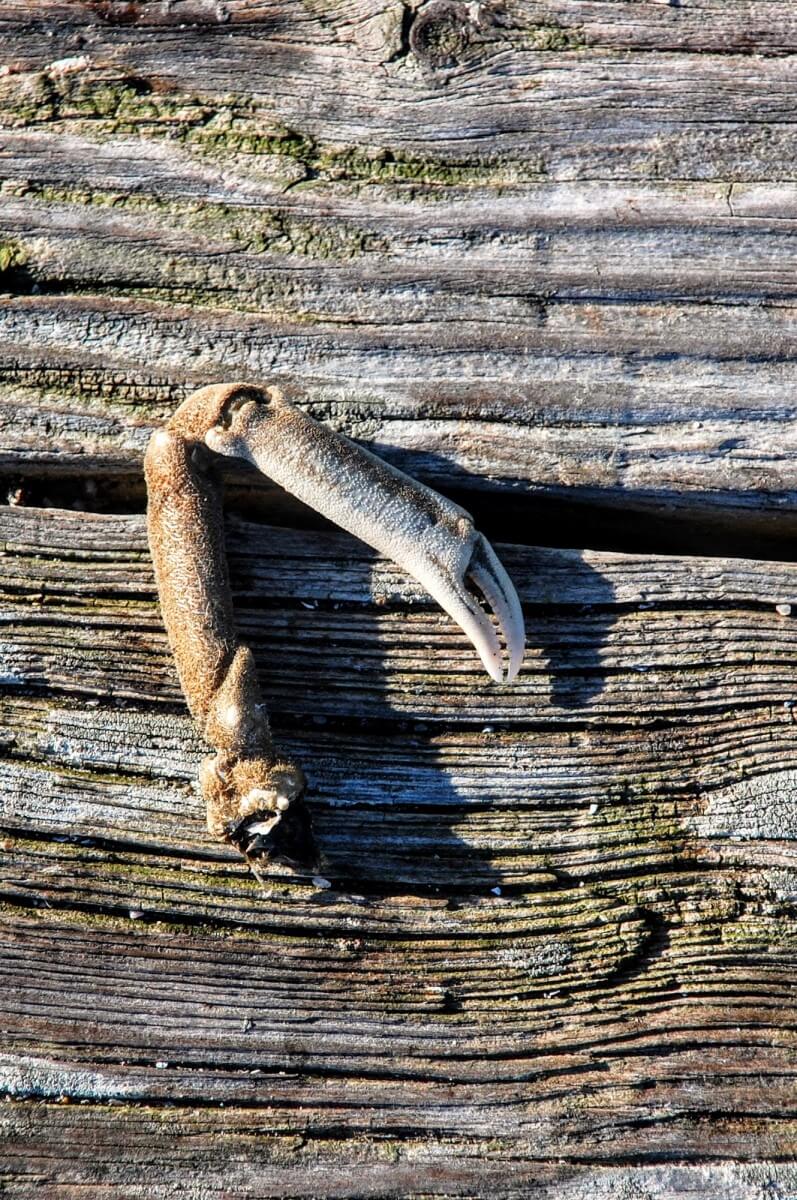
The picture above is two horseshoe crabs. I want to believe that they were not consummating their affection in this still image, but my uncertainty on that matter led me to exclude them from the video. As soon as I parked my car and hiked along the marsh with my gear, I knew I had chosen a prime location because I immediately spotted a lone Blue Heron. I acquired a lot of footage of this creature and many others. I felt like Nigel Thornberry as I was in such awe of the wild animals that one could find right off the highway. I did however have a hard time with the blue crabs. These creatures were more camera shy than most. Their depiction in the video is just the tip of the iceberg of the dance I had to do with them. Eventually after enough sweet talk, they warmed up to the lens. I truly hope my crab friend evades the culinary demise imposed on so many of his brethren blue crabs before him.

rainbowroof

Uptown locations for filming in Ocean City

One of the final locations of this journey was 112th street and surrounding regions. On a side note, I do not know what compromised the image quality of my photographs so I further encourage you to watch the original videos to see their true quality. Above is a photograph taken from the roof of the Rainbow Condominium. They so graciously allowed me roof access to continue my shoot. 112th street is a very interesting place. There is a wildlife sanctuary behind the Goldcoast Mall, and the row of condominiums lining the beach created a sort of industrial beauty. Although I don’t expect tourists to actively seek out a sight like that.

There is so much to say about these travels and the making of these videos that I wish did not have to be limited to the size of this blog post. I met many people, crabs and dogs in these endeavors and look forward to shooting more. I hope you as a viewer find them to your satisfaction.

Jet Skiing Remains King of Ocean City Watersports

Ocean City watersports provide options ranging from mild to extreme. Jet skiing can be either: laid back for casual riders or the key to an extreme day. Each summer, this time-honored beach tradition entertains locals and tourists with high speeds and scenic views for hours on end, making jet skiing a prerequisite for any authentic Ocean City experience.

An afternoon of jet skiing around Ocean City is a great way to up the ante on your vacation’s excitement. Whether you want to catch some waves, taxi around the bay, or explore the less travelled areas of Assateague, Ocean City watersports have a seemingly unlimited amount of jet ski rental companies ready and waiting to give you the ride of your life. Most businesses run guided tours from the early morning through sunset that are 30 minutes to an hour long and are equally as fun for an individual or entire group.

Ocean City Maryland Jet Ski Rentals

OceanCity.com interns Libby and Charlotte getting some pre-ride safety instructions from the friendly folks at Odyssea Watersports.

When it comes to jet ski rentals, more often than not, fun is the outcome, but safety always comes first in Ocean City. You must be accompanied by a parent to if you are under the age of 18 and have to be at least 16 years old to drive. Prior to heading out on the water, all renters are required to take and pass a boater’s safety course administered by the rental company. Once the ride begins, all jet skiers must wear a provided lifejacket and trained guides are present throughout to ensure all riders adhere to the 200 ft rule and other safety guidelines, as well as remain in the designated area.

With an assortment of options to chose from, deciding which watersports company to entrust your jet skiing journey to can be challenging, but Odyssea Watersports and Paradise Watersports.

Odyssea Watersports has been family owned and operated for more than 15 years and purchases new skis each season, guaranteeing riders the highest quality experience with the newest equipment available. Odyssea also keeps its skis directly in the water, as opposed to on floating docks, and the ride area is just yards away, meaning your ride starts immediately and is not diminished by unloading or traveling to another area. As you begin and end your ride, Odyssea provides professional photographers to capture the look of unadulterated bliss on your face.

Ocean City Watersports rock!

Ocean City watersports
Paradise Watersports jet skiers getting instructions from their guide.

Paradise Watersports, located at Hooper’s Crab House just over the Route 50 bridge, is the largest watersports facility in Ocean City and boasts a two square mile ride area, the largest in town. Like Odyssea, Paradise’s ride area is just seconds away and photographers are on hand to help preserve the memory of your jet skiing experience for years to come.

Regardless if you opt for Odyssea, Paradise, or any other of the numerous watersport rental companies in town , do yourself a favor before fall hits and treat yourself to the unforgettable adventure that is jet skiing in Ocean City.

Local adaptive athlete sets his eyes on gold and more

When people thank Jeremy Goetzinger for his service, he smiles and corrects them. It’s a peculiarity of being a person who is missing limbs during war time. He’s had plenty of time to get with it, though and is more likely to feel embarrassed for the over-enthusiastic well wisher than anything else. Being positive is practically a survival technique for Jeremy. It got him through the disease that took both his legs, onto a wheelchair basketball team that took the national title, through several marathons and, if he has his way, to the 2020 paralympics in Tokyo and beyond.

The Waldorf, Md. native was working as an electrician in Las Vegas when he was diagnosed with buerger’s disease, a rare  condition affecting the blood vessels in the legs. When he understood how his life would have to change, Jeremy decided to change it even more radically and threw himself into hand-cycling. Training in the desert gave him a particular advantage, so when he was asked to join a local wheelchair basketball team, he was happy to add that sport to his resume.

He was a natural and, since he had the stamina that comes with being a long distance cycler in the desert, he was able to help lead his team to victory in the 2011 wold championships. He met and married, Katie coincidentally a Waldorf and last year they relocated back to Maryland, Ocean Pines specifically, to raise their daughter Paisley closer to home. Katie is a program manager for the Ocean Pines recreation department. Between the two of them, they’ve cultivated an active lifestyle.

paralympic training
Handcyclist Jeremy Goetzinger poses with his bike in front of his Ocean Pines home as his dog Hurley looks on.

Biking for a higher reason

Biking for pleasure was fun, but eventually started to prove a little unsatisfying for Jeremy. His competitive spirit wasn’t satisfied with just getting exercise, he wanted to do something more. Then he wanted to do more than that. He decided to start competing in marathons.

While bicycle races tend to be exclusionary, marathons are adaptive athlete-friendly. They tend to give the handcyclists an earlier start time but hold the races concomitantly. Every major marathon, including Boston, N.Y. and Los Angeles has an official hand cycle component that is proportionally difficult to enter as the traditional race. Handcycyclists have to qualify at certain times and in smaller races before they can move up the competitive food chain.

Since there was no wheelchair basketball program in Worcester County, Jeremy threw himself into handcycling nearly full time. He downloaded the training program the US Paralympic team uses and started plugging through that. He began qualifying for larger and larger races and this year announced he wanted to complete 50 marathons by the time he was 50, hoping to do five per year.

He is on track to make it but he needs a little help, which is why he started two different GoFundMe initiatives, one to help support him on the road, covering travel and entrance fees and another toward the purchase of a world class bike.

“There’s a saying among cyclists,” he said. “‘Speed costs money.'”

Training for and qualifying in marathons is only the first step. The second step is to earn a spot on the Team USA Paralympic squad bound for Tokyo in 2020. The elite athletes who represent the US often are partially community funded (more than 300 Paralympians have GoFundMe pages for Rio). Communities, when you think about it, sponsor athletes from the time they’re in little league. As the sports require more commitment of time and resources, though, the field gets a little smaller.

Step one, then, is to train at elite levels. Step two is to compete for his country. Step three? Develop a culture of adaptive sports in Worcester County that might just help the next adaptive athlete rise through the ranks.

adaptive athlete
Paisley Goetzinger shows off some of the awards her dad Jeremy has won as an adaptive athlete across several competitive events.

Earning the service “Thanks”

That Jeremy didn’t lose his legs in war isn’t much of a sticking point for him. Competing with both service members and non-service members creates a different bond among adaptive athletes. In fact, when they heard about his fundraising attempt, many of his colleagues who did lose limbs as soldiers tease him about having gone about it in the wrong way. But in a world where there are plenty of guys who have access to some material support, cultural support is lacking. Jeremy sees it as his duty to help change that.

In the coming years he and Katie, who already is a recreation department program supervisor, hope to build a community of adaptive athletes. There’s no reason to not have athletic programs in the region featuring adaptive athletes, Jeremy reasons. The pair want to develop competitive programs for adaptive athletes as one prong of their mission, but also create an exercise culture among people who are disabled and maybe have given up on sports.

“When you cross that finish line you forget all the things you can’t do,” Jeremy said.

Every time he does, the thinks of another thing he can do, then it becomes something he ought to do.

To help supply Jeremy with Athlete Support visit his GoFundMe here. Follow this link to help fund the gear to get him to Tokyo.


Express Shuttle Service Offered for White Marlin Open

0


OCEAN CITY, MD – (August 1 2016): The Town of Ocean City will be once again offering an express shuttle service to and from the Convention Center parking lot to the 42nd Annual White Marlin Open. The shuttle, which will run from 3 p.m. to 11 p.m. from Monday, August 8 through Friday, August 12, will pick-up and drop off passengers in the south Convention Center parking lot to or from Jacqueline Avenue at 14th Street.

The frequency of service will be approximately every 20 minutes. Fare is $3 Ride-All-Day. $3 Ride-All-Day passes are also valid for same day service on Coastal Hwy. and Park N Ride Buses.

For more information about the express shuttle service, please contact Ocean City’s Transportation Division at 410.723.1606or visit:  http://oceancitymd.gov/Public_Works/transportation.html

Tiffany & Brian

Ocean City WeddingMy husband and I were married on August 7, 2016, my 40th birthday, on the beach around 21st Street at sundown. It was both of our second marriages, it was just the two of us, the minister, and the ocean and it was as beautiful as any wedding I could have imagined. Proof that things can be better the second time around!

Can You Sit the Stand? What it takes to be a lifeguard in Ocean City

Can you imagine one of your daily routines on the job is dragging a 300 pound chair in sand? If you are a member of the Ocean City Beach Patrol (OCBP) you know all about it. If you want to be an Ocean City lifeguard, you should know it is a physically demanding job. The OCBP currently employs over 200 people. Surf Rescue Technician (SRT) is the title that our lifeguards earn once they complete Surf Rescue Academy and you see them wearing their red uniforms and manning the tall and very heavy white lifeguard stand. Each SRT is a member of one of the 17 crews that stretch from the Inlet jetty to the Delaware state line.
Each crew functions as a team and has five or six lifeguard stands, with the crew chief stand located in the center along with a two way radio as a communications link to the Town’s 911 communications center. In addition to the crew chief there is an assistant crew chief and up to six additional SRTs who work together to cover all stands in the crew from 10 a.m. to 5:30 p.m. as well as days off, lunch breaks and mandatory workouts.
Yes, mandatory workouts! They not only have to meet certain physical requirements to be hired as an SRT and be re-qualified each summer season with the patrol, they also have to complete a prescribed daily workout of at least 20 minutes per day in the midst of their guarding shifts. In reality, our SRT’s are no different than a professional athlete who we have hired for their physical attributes and have trained them in techniques that allow them to use these special skills and abilities to protect you when you visit.

Lifeguard paddling
Keeping fit is critical for members of the Ocean City Beach Patrol.

Lifeguards exercise

To provide coverage for workouts, some SRTs are scheduled for a 4.5 hour shift. When working this shift the SRT starts their work day at 10 a.m. They begin by making sure that the entire area of the beach covered by their crew, is prepared for the day. Once set up and administrative tasks are completed they begin relieving each SRT in the Crew who is on a 7.5 hour shift. Once each SRT is relieved they are required to perform an ordinance check (local rules and laws) on their beach by walking (jogging) in among the beach patrons checking for unsafe conditions and infractions, followed by a mandatory workout prescribed by the Crew Chief. The workouts usually consist of swimming, running or both. They can change daily at the discretion of the crew chief that runs the workouts in a certain area. If it’s extremely hot, then it’ll likely be a water workout day, but on a day when the wind is high, and temperature moderate, there are all types of various workout activities the crew chief will devise.
Once all crew members have completed their morning duties and workout the “lunch rover” will replace each SRT who is working the full day for a 30 minute lunch break beginning at noon.

Ocean City lifeguard
Making sure they are in top physical condition all season is a point of pride for many on the OCBP.

Lifeguards get incentives to work out

As an added incentive for the 17 crews to work hard at training and stay in top physical shape, the patrol holds an annual crew competition each year in late July. One of the reasons we do that is so that the crews will want to practice together which occurs before or after the workday. The Beach Patrol also has a triathlon club and organizes physical events such as running and swimming (200 M sprints up to 2 Mile distant events) early in the mornings or evenings when the guards are off duty which lead to certifications that are required for higher positions within the patrol. This is one of the ways that our guards move up the ranks. They get certified in the different programs so they can apply for another position the next year. Our organization is about encouraging our employees to stay in shape, to continue training and to get better. As a bonus, all of this extra work that they do off the clock helps them when they’re actually working.

Being in top physical condition is not only critical to do the daily job of guarding but it also comes in handy for competitions. Some patrol members compete in contests that are held around the area and in other parts of the country for lifeguards. Each year we send a team of OCBP female guards to women’s competitions and we also send a competition team consisting of males and females to participate in the United States Lifeguard Association Regional competitions. In addition we participate in the lifeguard Olympics which is held in Rehoboth Beach every year. Teams are selected through tryouts to represent the OCBP and all those who compete are scheduled off and receive no compensation or support from Town of Ocean City funds although many of our teams do receive support from local businesses. All of these competitions offer an opportunity for lifeguards throughout the region to display their physical fitness.
So when you see the guards doing strange maneuvers on the beach, now you know they are probably either doing a mandatory workout devised by their creative crew chief or training for an upcoming competition…. Or both! But rest assured, even though they are on a break and working out, another guard is covering for them so that all 10 miles of Ocean City are fully guarded. However, during their workout they must remain in the area that is covered by their crew so in an emergency they are available to assist and add extra support to the crew.

Training to be a lifeguard means you are ready to be part of a team that takes lifesaving as well as conditioning very seriously

Train to become a lifeguard

If you would like to become a lifeguard, it might interest you to know that because of the unique demands of the job, the Ocean City Beach Patrol does not require or recognize certification or past experience with other agencies. Anyone seeking employment with the OCBP must successfully complete all aspects of an eight-phase pre-employment physical skills evaluation. Testing for OCBP to work next summer will be offered in Ocean City in August. Once a candidate passes the physical skills test they are appointed to a 65-hour, paid ($13.29/hr and $14.65 after a three week probation period) Surf Rescue Academy. Prior to the start of academy and each year they return to the Patrol, they must pass a Mandatory drug test. During Surf Rescue Training Academy each rookie is trained and assessed in all necessary skills, techniques, procedures and protocols of the Beach Patrol. 

We encourage anyone interested in becoming a lifeguard to call beach patrol headquarters at 410-289-7556. For specifics on requirements, test locations, dates and times or to register for a test, please refer to OCBP’s website or email ocbp@ococean.com. Click here to register for a pre-employment skills evaluation.

Help us spread the word. If the lifeguards are not on duty, then it’s not safe to swim. Always remember to keep your feet in the sand until the lifeguards in the stand! We stay physically fit to protect you but we can only do that if we are on duty.

5 virtual Ocean City views you just can’t miss

We’ve been exploring the region a bit with our 360 camera and helping put a virtual Ocean City online has been really, really fun. If you’re not familiar with the camera, it takes a photo in all directions simultaneously and stitches it together so that a viewer can scroll through and get a tour of a room, area or building right from the comfort of their own home. I’ve been a huge fan of using Google Maps and contributing to it for some time. I always figured that if I was in a place and I could help give people a better or at least a more personal view of the place from afar it was at the very least good cyber-karma. As it turned out it was more than that. Google liked my photos enough that they made me a local guide, so my pictures get right on the Google Maps page and I get fun stuff from them, like a little extra free storage.

When they started this new program of allowing people to post 360 photos on the map for people to see, it seemed a natural adjustment. I do more than a little trekking around the area, so sharing 360 photos as well as traditional photos isn’t any harder than tagging my work photos when I upload them. This week, I was tooling around both the beach and some of the big beachfront hotels taking regular photos for OceanCity.com, and some of them were kind enough to let me explore with the new camera. I’m still working on editing techniques (such as PhotoShop-ing out the camera and making the colors pop a little better) but it is coming along nicely. I thought I’d share some of those photos this week and the story behind them.

Kids taking selfies

This is one of my favorite ways to use this camera. The kids give the photo a little more texture, plus they’re funny.

Sharing Balcony Views many people can’t see

I was at the Grand Hotel on assignment and they were kind enough to let me up into one of the rooms to get a shot of the view. Being a local I’ve never stayed there, so it was cool to imagine coming in from the beach, toweling off and heading out to the balcony to get a little more beach without all the sun.

Virtual Day Drinking

The Clarion is known for Lenny’s, its spectacular beach bar:

But when I wandered into Breakers for a little respite from the heat, the cool dark interior bar was a perfect reversal.

A seat at the head of the table

I was interviewing the guys who run the kitchen at the Captain’s Table restaurant (check out that story next week) and when I was done they gave me access to the restaurant before it opened to try out my fun new camera. Very few people sit at the head of the Captain’s Table, so I thought it would be a fun one to share.

Photo contests, horse genealogy, and a friendly (crew) competition

The Triumphant return of Photo Friday on Facebook already is a success, but we would like you to help make it even more successful by both participating and sharing your favorite photos of Ocean City and the surrounding area. For those of you who already have participated, make sure to share your photo to get the most votes. Winning this contest is in the hands of the participants. First take a great photo and then let everyone know about it. There are only 50 or so likes separating first and last place so it still is anybody’s game.

This week a local historian provided some insight into the Assateague Pony origins in celebration of the annual pony penning that takes place between Assateague and Chincoteague islands. He made quite a case for his angle, while taking the others seriously. It’s a long but pleasant read.

OCBP Crew Competition

The Ocean City Beach Patrol takes and afternoon to both show off their skills to the public and also blow of a little competitive steam in the annual OCBP Crew Comps. Each section of the beach is broken up into the responsibility of different crews. Over the course of the summer the crews develop a bond both with the people who frequent their section of the beach regularly as well as with one another.

Take a walk on the Boardwalk

After the crew competition, we took a little stroll on the Boardwalk, which always works great as a Facebook live post. Make sure to follow us if you don’t already, and feel free to reach out and let us know if you want us to cover something live that we haven’t already.

Free Concert on the Lawn

0

The Chesapeake Silver Cornet Brass Band will perform at the Berlin Heritage Foundation’s third concert on the lawn this season on Sunday, August 14th at 6:00 p.m. This concert is co-sponsored by Berlin Main Street.

Bring a chair and a picnic to enjoy this free concert on the lawn of the Calvin B. Taylor House Museum at 208 North Main Street in Berlin.

The Taylor House Museum is open through the end of October on Mondays, Wednesdays, Fridays and Saturdays from 1-4 p.m. Group tours are available anytime by appointment.

For more information contact the Taylor Museum at 410-641-1019 or visit our website at www.taylorhousemuseum.org.

Seriously, though, what’s with the quilts?

It’s been more than a month since Berlin woke to its public benches draped in knitted afghans, and there’s no really telling how much longer they will be a thing. The quilts appeared as part of a public art project designed to provoke commentary as well as appreciation. They were made by the knitting group that meets at A Little Bit Sheepish, the yarn store in town with the object of covering as many of the benches as the group could muster.

The question many people have asked is ”Why?” but that also is, in a way the answer.

Ivy Wells, town economic director, said this is the first in a series of guerrilla public art instillations aimed at tweaking people’s perception; kind of “Random Acts of Artness.” That quilts aren’t evocative of alternative public art kind of is the point, because now they are.

This summer, Berlin already has erected the first two parts of a mural conceived and painted by local school children and continues fundraising to complete the work. The 2nd Friday Art Stroll have become a nearly regional event, drawing people specifically rather than accidentally to the town to experience art in the shops, and even the number of working artists in the downtown district continues to grow. Punctuating and accenting the town’s art bent is this new project of unexpected art, for art’s sake, popping up without warning.

Ivy said she was surprised how well and long the knitted blankets have held up. The expectation was that they would be up for a couple of days and then, as they began to tatter or lose their shape, the projects would be donated to the humane society. Although the donation part is still planned, the tattering hasn’t yet occurred. The knitters apparently built these works of art to last.

The knitters were approached with the directive to use quality material and to be creative. Ivy didn’t approach them with the completed project in mind, only the concept. The knitters tried out a couple of different ideas before settling on bench coverings.

The next art project already is underway, Ivy said she id waiting for the right time to reveal it. Or let it reveal itself as the case may be.

4 perfect places to beat the heat in North Ocean City

There are no lack of cool places uptown. Once you get above 40th Street the parking gets a little easier and, depending upon the date and time, the waits get a little shorter, especially at the places that, aren’t strictly-speaking destination restaurants. What we’ve compiled here is a list of places that aren’t just cool, though. They also are cold and perfect places to beat the heat. Midday can be tough. For some it is too early or too hot to eat and, if you need a respite from the beach finding a quiet place can be a challenge. As a general rule, visit places that are known for their nightlife in the early afternoon, and you will find it is easy to chill out with good food and drinks.

Ladies love Longboard Cafe

Specializing in inexpensive appetizers and perfect margaritas, the Longboard Cafe is a great place to hang out and stay away from the sun. Tucked off the beaten path a bit, the outside serving area is covered as well in case you don’t want too much sun but are after the bay breezes. Happy Hour gets busy as people wander over from nearby condos and hotels, but it isn’t unreasonably busy, just busy enough to remind you that you’re still on planet earth with other people who like to treat themselves to an afternoon out.

Assateague Pony origins are easily traceable

The origin of the Assateague ponies has always been portrayed as an unsolvable mystery. What is always mentioned is a legend that they swam ashore from a shipwreck of a Spanish galleon centuries ago. It was this legend that lured Marguerite Henry to Chincoteague in 1946. What she saw and heard there inspired her to write Misty of Chincoteague which was published in 1947 and was made into a movie in 1961. Up to that time, the prevailing theory or story was that they came from a Spanish shipwreck.

Today, the custodians of the horses, the National Park Service and the U.S. Fish & Wildlife Service, are also the “custodians” of the narrative on their origins. Both agencies are discrediting the Spanish shipwreck theory in favor of two theories that are easily disproved. One theory says that the horses were sent over to Assateague to avoid the fencing laws imposed on mainland farmers. The other theory says that the horses were placed there to avoid taxes. This is the narrative found on their websites and tourist literature disseminated by the National Park Service and the U.S. Fish & Wildlife Service. It has often been repeated by writers as gospel.

Both of these “theories” demand that we are to believe that the owners of these valuable horses just left them there to fend for themselves. Assateague is only hundreds of yards from the mainland in the Ocean City area and about five miles at the widest part of Chincoteague Bay and easily reached by boats or barges from the mainland. This theory of abandonment suggests a solitary event. Otherwise, we are asked to believe that the farmers routinely dumped them on Assateague without bringing any back. Historical documents prove that fences were used as early as the early 1700s. Tax records for Accomack County stored in the Virginia State library in Richmond, Virginia, list the owners of horses and cattle beginning in 1783 when taxes were first imposed. These records show that the horses on Assateague were taxed. The two predominant theories promoted by federal agencies as to the origin of the horses have no basis in fact.

The historical record is clear that the original owners of Assateague in the 17th century, which stretched from Chincoteague Inlet to Fenwick Island, pastured their horses and cattle there. Some early land patents such as Winter Quarter and Winter Pasture reflect this practice. These names tell us that pasturing was a seasonal activity which implies that horses and cattle were returned to the mainland farms—not forgotten about or abandoned. In 1835, Dr. Thompson Holmes, who had a farm on the mainland just south of the Maryland border, wrote an account of the horses and described the advantages of pasturing on Assateague: “Their winter subsistence was supplied abundantly by nature, the tall, dense, and heavy grasses of the rich flat lands, affording them green food nearly all winter.”

Estate records going back to the late 1600s document that when an owner of land on Assateague Island died, his horses and cattle were inventoried, valued, and described. The horses were too valuable to be abandoned. These same records also document that there was a caretaker on Assateague as early as 1696 whose duty was to protect the horses and cattle.

The routine practice of pasturing on Assateague was challenged by Mother Nature in October of 1749, when a devastating northeast storm sent a wall of water over Assateague Island. The tide ran two miles into the woods on the mainland. At Fenwick Island at the north end of Assateague, it was reported that only five of the 500 head of cattle and only one of the sixty horses pastured there survived. At Norfolk, the tide was said to be fifteen feet above normal causing extensive damage. Estate records which followed showed very few horses were left on Assateague.

The Assateague Horses first arrived on a Spanish Galleon

The Spanish Galleon

On September 5, 1750, a Spanish galleon called La Galga ran ashore on Assateague near the Maryland-Virginia border. La Galga had been escorting a fleet of six other ships from Havana, Cuba, to Càdiz, Spain, when the fleet encountered a hurricane off the north coast of Florida. The disabled fleet was propelled by hurricane winds and the Gulf Stream up the American Coast. La Galga sat in shallow water for two months while the locals salvaged what they could. In early November, a northeast storm broke the gun deck loose and the ship sanded in.

In the early 1800s, it was noted that the wild horses on the island were much smaller than those on the mainland. They were described as a “race of very small, compact, hardy horses, usually called “beach horses” which were believed to have been on Assateague since long before the American Revolution. These horses were so small that a tall man might straddle one and “his toes touch the ground on each side.”

By 1805, these horses were dubbed “island horses” and were valued at $40 each while the mainland horses were valued around $75 each. Mainland horses that were pastured on Assateague surely interbred with what was then considered an inferior breed. After the Civil War, the “island horses” were more commonly known as “beach horses” and were still valued far less that their mainland cousins

In 1877, Scribner’s Monthly published an article on Chincoteague Island, the Assateague ponies, and the annual pony penning. The author, Howard Pyle, was told that there was a “vague tradition” on Chincoteague Island that the horses had escaped from a vessel wrecked on the southern end of Assateague and that the Indians then carried the survivors to the mainland.

In 1884, Wallace’s Monthly provided a detailed account of the oral tradition of the Spanish shipwreck:
“Away back in the dim and misty past, beyond the reach of the memory of the oldest and perforce most wrinkled and weather-beaten native, a ship, freighted deep with Spanish horses, went ashore on the treacherous sands of Chincoteague Island…some of the horses swam ashore and lived…Just how long ago the ship went ashore, or how many horses saved themselves from the wreck, or whether the crew was drowned or not, or where the ship cleared from or where she was sailing to, no man knows…The account said the ship wrecked either upon…the southern point Chincoteague Island or upon the barren wasteland called Assateague Beach…The original Spanish horses were small…A taint of inferior blood was introduced into the Chincoteague drove through some farm horses ferried across the bay from Maryland some years ago…Many years after the wreck of the Spanish ship a handful of fisherman settled on Chincoteague.”
This legend lived on and was repeated in numerous newspapers and magazines prior to Mrs. Henry’s visit in 1946 to Chincoteague. When she arrived at Chincoteague, she met Mrs. Victoria Watson Pruitt who was considered to be the local historian. She was born in 1884 and her family had owned land on Assateague in the late 18th century very close to where the Spanish galleon had wrecked. In her private papers she wrote:
“Some people tried to discredit the story of the Spanish shipwreck as a source [from] which the ponies came. Others would like (now that the ponies are famous and have made Assateague and Chincoteague the talk of the entire country for beautiful ponies) to claim the honor. But go where you will, up and down the Atlantic Seaboard, from Maine to Florida you will not find the ponies. In fact Assateague is home of their forefathers and it’s good enough for them.”
Mrs. Henry stayed with Clarence and Ida Beebe while in Chincoteague. The Beebe’s ancestors reached back to the first English settlements on Chincoteague. Clarence was a horse farmer and shared the legend as he had heard from his predecessors with Mrs. Henry. This narrative in Misty sums it up. In the story, his grandson, Paul Beebe, asked the question:

“Grandpa!” “Is it true about the Spanish galleon and the ponies? Or is it a just a legend like the folks over on the mainland say?”
“’Course it’s true!” replied Grandpa. “All the wild herds on Assateague be descendants of a bunch of Spanish hosses.”
“Then it’s not a legend?” Maureen Beebe asked.
“Who said ’twasn’t a legend?” Grandpa exclaimed.
“’Course it’s a legend. But legends be the only stories as is true!”

Grandpa also told his grandchildren “Why I heard tell it ’twas the Indians who chanced on ’em first.”

Assateague Island Aerial View
On a clear day, you can even see all the way out to Assateague Island (though not quite this close-up).


National Park Service discredits shipwreck legend

A major departure from the Spanish shipwreck legend was made when the National Park Service Historian, Mr. Edwin Bearss, published his General Background Study and Historical Base Map: Assateague Island National Seashore. Mr. Bearss concluded, as other historians before him, that the horses today are the result of abandonment. Bearss’ primary source and basis for this assumption was the historian Jennings Cropper Wise who published Ye kingdome of Accawmacke, or, The Eastern Shore of Virginia in the Seventeenth Century in 1911. Wise had concluded that “some of the planters of the peninsula, in order to avoid the expense of fencing off the marshes on the mainland, transported their stock to the nearby islands about this time, and that this is the true origin of the Chincoteague pony concerning which so many fables have been written… Here then is not only a reasonable origin for the pony, but the origin of the pony-penning as well! Why look to shipwrecks and pirates?”

The Spanish Galleon comes to light

In 1911, the existence of a Spanish shipwreck on Assateague Island was virtually unknown, except by legend. It was not until 1908 that the archives of Maryland were published which contained records of this historic event. Of primary interest was the letter written by Don Daniel Huony, the captain of La Galga, to Samual Ogle, the Governor of Maryland. In this letter, Huony describes a survey done that positioned the shipwreck “two ship lengths” north of the Maryland-Virginia boundary line. Years later, this letter would inspire many treasure hunts.

Had Wise known about La Galga his opinions about the shipwreck legend would certainly have been different.

Parking at Assateague Island

The Assateague horses still retain some Spanish blood

There is more evidence supporting the horses Spanish origins. In 1991, the Journal of Wildlife Management published their research findings on the genetic ties of the Assateague ponies. The study’s conclusion was that there was a “close genetic resemblance between the Assateague Island horses and the Paso Fino breed which descended from animals brought to the New World by the Spanish.” The Spanish archives make no reference to horses on La Galga but there is proof that the Spanish carried horses on board some of their ships. When the Spanish treasure fleet of 1715 wrecked in Florida, the archives record that the survivors ate some of the horses that had been on one of the ships. In the early 1980s, treasure hunters salvaging the 1622 galleon, Santa Margarita, in the Florida Keys uncovered a small horse shoe. In this case, the Spanish archives made no mention of them yet they had been on board. Dr. Eugene Lyon, who provided the historical research which led to the shipwreck’s discovery, surmised that the horses belonged to the soldiers who were traveling back to Spain. The fact that La Galga was carrying nearly sixty soldiers as documented in the Spanish archives further supports the conclusion there were horses on board when she ran ashore.


A Unique Breed descended from Spanish horses

In 1994, the Chincoteague Ponies were recognized as a unique breed. There is no doubt that these horses descended from those aboard the Spanish galleon, La Galga. These horses then interbred with other horses that had been brought periodically over from the mainland. Hurricanes since 1750 have decimated the herd but they recovered thanks to the addition of other horses such as the Shetlands which were added after the loss of half the herd in the Ash Wednesday storm of 1962. With the passage of time, the Spanish blood line has grown thinner and thinner just as the Spanish shipwreck legend is being slowly erased from the public conscience. It can be said that both the Spanish shipwreck legend and theory that the horses descended from those brought from the mainland are both correct. But this unique breed had its beginnings with the shipwreck of La Galga.

Wild Ponies of Chincoteague

The Discovery of La Galga

In 1978, after having read the letter written by Captain Huony of La Galga found in the Maryland archives, I began archival search for more information on this shipwreck in the archives of Virginia and Maryland and in Spain. When I began, I made no connection to this shipwreck and the wild horses. After numerous searches in the Atlantic Ocean, and discovery of documents in the Accomack County Court House that proved that the beach had built out since 1750, I concluded that the shipwreck was buried beneath Assateague. Documenting the 1750 boundary line between Maryland and Virginia was easy using plats found at the courthouse. In 1983, I was directed to a Mr. Ronnie Beebe, the great nephew of Clarence “Grandpa” Beebe. Ronnie Beebe passed on to me the legend about the location of the Spanish shipwreck. He said it went into an inlet causing it to close. He not only pointed very near to where the shipwreck is now determined to be, he told me about a Spanish pistol and a handful of pieces of eight which had been found in the woods opposite the wreck site. He told me it was the Indians who discovered the shipwreck and rescued to Spaniards in 1750. Documents in Spain verify that the crew came ashore in Indian canoes.

Today, another chapter is being written on this historic shipwreck. Archaeologists have recently located numerous magnetic anomalies in the area. One was buried beneath a mound of sand that can be seen from space. It is believed the main portion of the shipwreck is waiting to be discovered nearby.

For more on La Galga visit thehiddengalleon.com

John Amrhein, Jr. with model of La Galga
Author, John Amrhein, Jr. with model of La Galga