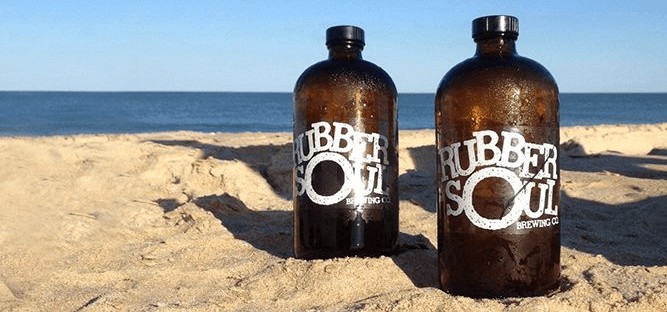
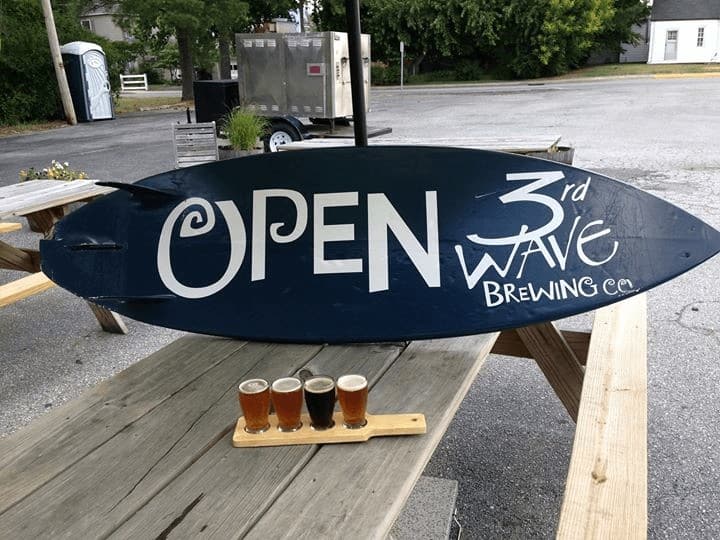
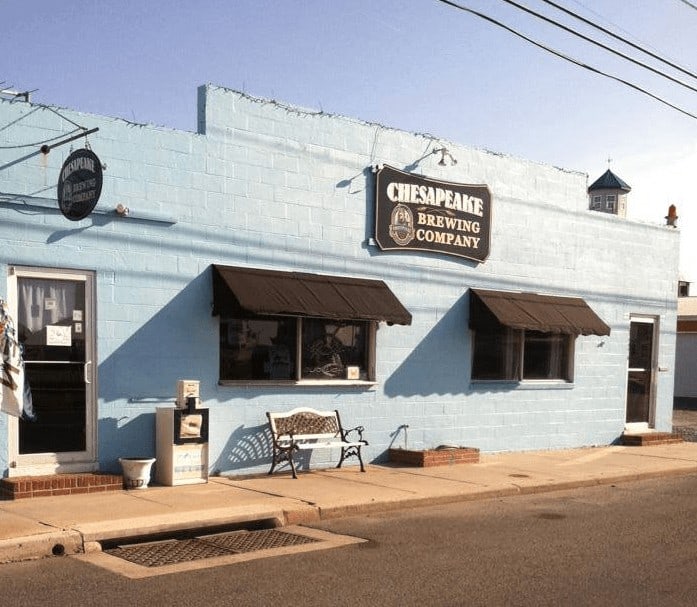
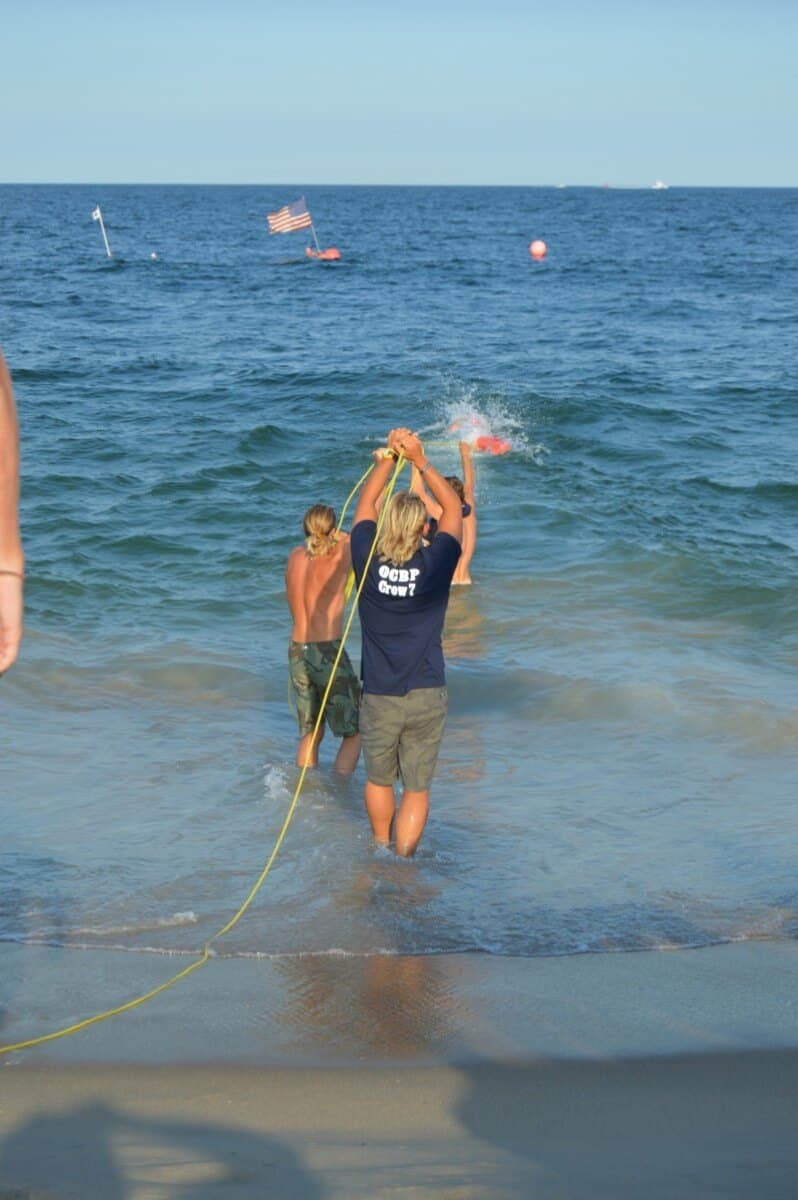
Berlin Md, voted America’s Coolest Small Town in 2014, is just a short drive from Ocean City Md, but is a world away in terms of style and history. Packed full of small gifts shops, antique stores, restaurants and bakeries, the town also has many art galleries and local craft stores. There are 47 structures in Berlin which are on the National Historic Register, and the Taylor House Museum houses the history of Berlin. Take some time away from the beach while on vacation, and wander the meandering streets of Berlin to discover something new, yet old. These Berlin Md photos show the red brick buildings of the old historic and picturesque town.
Berlin Md Photos
2015 OC Air Show Photos
The OC Air Show brings thousands to the resort to view the skills and bravery of these pilots. The Breitling Jet Team, F-22 Raptor and Blue Angels dazzle and amaze the crowds below with their precision and daring. Visible from anywhere on the Boardwalk, and some parts of the show even visible from as far North as 140th Street, these guys never fail to entertain and impress their audience. Check out these 2015 OC Air Show photos.
2015 OC Air Show Friday Practice Photos
The OC Air Show is a spectacular event, and can be seen from far and wide in the resort. These are some of the 2015 OC Air Show Friday Practice Photos, an extra bonus for those on the beach on the Friday before the show.
Uber has it over them, resort cabbies contend
(June 12, 2015) As anticipated, the arrival of Uber cab service in the resort is not going over uber-well with Ocean City’s traditional taxi companies.
At least one of the resort’s large-scale medallion holders is making an effort to have local government pull back on some of the regulatory burdens it has historically put on cabbies, warning that continuing the current un-level playing field will likely cause the industry to implode, sooner rather than later.
“I’d take it either way,” said Ralph DeAngelus, co-owner of Taxi Taxi. “Either they find some way to come down a little harder on Uber, or lighten up on some of the things they put us through.”
Earlier this year, legislation was passed in Annapolis to create a new class of “common carrier” transit provider in the state. The so-called Transportation Network Service classification covers services that provide a digital network to connect passengers with contract drivers.
This definition is tailored to services such as Uber and Lyft, which do not operate taxi themselves, except for a limited number of premier services. Rather, such services provide a smartphone app that independent drivers can contract to use.
The app links drivers with prospective customers, guiding them via their phone’s GPS to the pickup and drop-off locations. The drivers also subscribe to Uber’s uniform pricing system and share the profits with the company. All financial transactions between drivers and customers are done via credit or debit on Uber’s app.
Subsequent to the legislative decision, the Maryland Public Service Commission promulgated a detailed set of step-by-step regulations governing so-called TNS providers.
The issue, as expected, is that these state regulations are far looser than the regulations that cities and counties have previously placed on traditional taxi services, thus creating what would appear to be an unequal competitive circumstance.
Further, the state language expressly prohibits local jurisdictions from placing additional restrictions on TNS services.
One of the biggest discrepancies, DeAngelus said, is that the state commission allows Uber drivers to use their personal vehicles without any additional inspection. In Maryland, this means that once a car is purchased and inspected, the owner need not have it re-inspected as long as he or she owns it.
However, the city requires that medallion-holding taxi cabs get an annual state inspection, which must be submitted to the Ocean City Police Department, which then inspects the cab again and verifies the fare meter’s accuracy.
“We have to have our cars inspected on an annual basis, and after we’re inspected by the state, we have to take our certificate to the OCPD,” DeAngelus said.
“I have 28 medallions. It takes me a full month of work to drive each car up to Baltimore, pay $70 to have it inspected, drive it back, and pay the OCPD another $150 to check the meter. Uber drivers don’t have to do any of that.”
Additionally, the PSC requires TNS drivers to obtain a state license but this license is subject to much less stringent renewal criteria. Conversely, Ocean City requires medallion drivers to re-submit everything, every year.
“Every year, I have to get my guys a new FBI background check, and a new drug screening, which is $120,” DeAngelus said. “Plus a city business license, which is $300, and a renewal of the medallion itself, which is another $500.”
In Ocean City, and many other jurisdictions, the traditional taxi system works like this: the city issues a certain number of taxi medallions, which cab owners initially purchase from the city and, following that, buy and sell amongst each other.
These medallions give cabs the right to conduct business on city streets, soliciting customers on sidewalks outside bars and nightclubs being a particularly common summertime activity. The medallions also come with a multitude of fees and restrictions, as mentioned.
But the fact that Uber drivers are able to circumvent the entire medallion system flies in the face of why medallion were introduced in the first place, DeAngelus said.
“The city doesn’t do a single pushup for that $500 I pay them per medallion every year. They just get it” DeAngelus said. “That money is supposed to be used by the city to regulate taxis and make sure our investment in this industry is safe. The taxis are the pocket that pays the city $500 per car to make sure these kind of shenanigans don’t happen.”
The other rationale for the medallion system is to protect customers from price gouging, as the city sets maximum rates for medallion fares.
But, again, Uber has completely avoided this at the state level. The PSC has no restriction on Uber’s “surge-pricing” system, which raises rates when demand is high and the number of available drivers is low.
“I followed a friend, who hailed an Uber, in one of our taxis the day before Memorial Day,” DeAngelus said. “My city-controlled meter rang $8. The Uber ride was $22. They were allowed, on Memorial Day Sunday, to raise their rate 2.9 times due to high volume. And the PSC basically says they can do that whenever they want.”
Currently, 170 city medallions are on the street and are frequently traded between drivers, some of whom are fleet holders, such as DeAngelus, and some of which are single-owner cab operators.
The latter are rapidly figuring out they can sell their medallions, use Uber, and avoid all the city fees.
“Earlier this year, I tried to buy three medallions off three guys, and I offered them $10,000 each,” DeAngelus said. “They said ‘No, we’re good.’ Then we see in the paper about the Uber laws, and a week later I bought two of them for $6,000.”
This devaluation not only hits the medallion holders, but also the taxpayer. The city collects a 25 percent surcharge on the price of any medallion sale, again with the justification that the money is needed to help offset the cost of administering the taxi regulations.
“The prices are dropping. That means the city didn’t protect my investment, and they didn’t protect their own either,” DeAngelus said.
As it stands now, there’s no reason larger fleet owners couldn’t ditch their city medallions and jump ship to the TNS system as well. All it would take would be to set up a digital system, where customers hailed and paid for taxis online. The only loss would be the inability to do street hails.
“That’s the only way it would affect me. My cabs could no longer wait in taxi lines at Seacrets or Fager’s,” DeAngelus said. “I could just set up a website and say I’m a PSC-defined dispatch software company. I wouldn’t have to pay the city anything and I could change my meter whenever I want.”
Patrol cars converted for public safety aide duties
(June 12, 2015) Similar to what Seinfeld’s Newman taught us about certified versus registered mail, all police work is a matter of public safety, but not all public safety matters require police.
Residents and visitors may have noticed over the past week that a number of Ocean City Police Department cars now feature magnetic stickers that block out the word “police” and replace it to read “public safety.”
These vehicles are being used not by sworn police officers, but rather by the increased number of public safety aides the department has hired this year to compensate for a decline in qualified seasonal officers.
“Since we had a lower number of seasonal officers this year, we hired more PSAs, more than we traditionally have,” said OCPD Public Information Officer Lindsay Richard.
Public safety aides may be seen driving around to perform any number of OCPD duties that do not require the attention of a sworn officer.
For instance, Richard said, taking after-the-fact reports for malicious destruction of property can be done by personnel trained to take such reports, but who are not necessarily badge- and gun-carrying officers.
“There are a number of things that a sworn police officer doesn’t necessarily need to respond to,” Richard said.
The number of summer officers employed by the department this year is approximately 70, as opposed to the 100 or more in years past.
The reduction is because of the difficulty in finding officers who will pass the full gamut of testing required to become an officer in the State of Maryland, since the OCPD has gradually reformed its hiring standards for summer officers to bring them in line with the full requirements of the Maryland Police Service Training Commission.
Ocean City is unique in having a carve-out in the state’s police legislation, which creates requirements for summer officers that are outside of MPSTC control, and which are thus immune to any state-mandated updates in training and qualification standards.
The caveat to this is that Ocean City must hire at least 100 officers each year in order for the exemption to take effect.
This creates a tipping point, where if the OCPD wishes to update its standards for seasonal officers to the point where less than 100 officers qualify, it then must meet the full requirement of the MPSTC and cease to have a seasonal force, at least by the state’s definition, which thus tightens the requirements even further.
Earlier this year, the OCPD proposed that the city work with a consultant to look into throttling back the seasonal officer program. That study has not yet come up for discussion by the City Council, at least publicly.
Social media pseudo-event warrants increased security
(June 12, 2015) Fool me once, shame on you. Fool me twice … well, better safe than sorry.
For the second year in a row, Ocean City police and allied agencies organized a significant increase in patrols this past weekend in anticipation of a possible “College Beach Week” event, a rather amorphous happening believed to be driven mostly by social media.
And, for the second year in a row, that event seems not to have happened, at least on any appreciable scale.
“I’m not sure if anything came to fruition, but that’s why we had an increased presence, in case it did,” said Ocean City Police Department Public Information Officer Lindsay Richard.
Which isn’t to say the heightened presence – unmistakable on the Boardwalk, with officers nearly every block – wasn’t needed.
As many local businesses observed, this past weekend, and likely the next two, are the peak season of “senior week,” when high school graduates flood the resort. This year’s crowd has been, by all accounts, particularly large and boisterous, but most doubted that this had anything to do with any kind of organized outing.
“There was certainly a big presence,” said Greg Shockley owner of Shenanigan’s Pub and the Shoreham Hotel. “Whether the police deterred any kind of event, or if it just didn’t happen, I don’t know.”
“You never know if the police presence is overkill, or if that’s the reason that nothing got out of hand,” agreed Lee Gerachis, owner of Malibu’s Surf Shop. “The whole thing looks like a can of gas next to a fire, but for whatever reason, it doesn’t blow up. I saw a lot of teenagers being rowdy, but not necessarily doing anything illegal.”
The quasi-event, spread on social media via the Twitter hashtags #CollegeBeachWeek or #CollegeBeachTakeover, appears to be backed by hip-hop promoter Party Headz DC.
Despite reports elsewhere that the event has “a troubled past,” the reality appears to be that the event has no past. Other promoters have organized similar events in other resorts, and some of those – such as one in Virginia Beach – have turned into public safety nightmares. But the only concrete link between those events and the potential Party Headz DC Ocean City event is the use of the same Twitter hashtag.
The other connection is that all the events, regardless of the location or promoter, are clearly intended to attract college-age African-Americans from urban areas. But racial makeup and Twitter use do not necessarily guarantee the same outcomes.
Nonetheless, police have actively followed up with Party Headz DC, and monitored social media channels to see if anything was actually brewing.
“Town officials have been in contact with the same people who attempted to do the event last year,” Richard said. “Our intelligence unit monitored social media throughout the weekend, but there was really nothing of value that came across.”
Rather, nothing more is needed to make mid-June a rowdy time, other than the usual crop of high school graduates.
“For the past 30 years, this past weekend and the next have been our busiest for the entire year,” Richard said. “Anyone who’s out on the Boardwalk can see that. It is an incredibly young crowd.”
Statistical data from the department would suggest that crime over this past weekend was actually down as compared to the same weekend in 2014. Total service calls over June 4-7 came to 1,740 officer-initiated actions and 521 citizen calls.
For the same Thursday-Sunday span last year – June 5-8, 2014 – in which “College Beach Week” was suspected to occur, the OCPD counted 1,816 and 688 officer and citizen calls, respectively.
More drastic was a decrease in arrests, from 184 last year to only 90 this year. Out of these, drug arrests also dropped, from 66 over four days last year to 17 this year.
The only high-profile incident appears to have been a stabbing on 12th Street and the Boardwalk on the evening of Sunday, June 12 but this did not result in the victim going to the hospital, and charges have yet to be filed after speaking to both the victim and suspect, according to police.
For most businesses, the story is the same: June’s performance is typically mediocre, especially through the week. With most families avoiding the month, and pre-booking for July and August, people in town over the age of 18 are typically spontaneous trip-takers whose visits are weather-dependent.
“I think a lot of it depends on people looking at the forecast and deciding if they’re going to come,” Shockley said. “Mid-week, last week, we were running about 30 percent at the hotel, probably about the same at the restaurant.
“This week, we’re looking at 70 percent, and I’d attribute that to the forecast for this weekend being good, where last week everyone knew it was going to rain.”
This week in OC: June 12-18, 2015
This weekend, it’s all about the OC Air Show here in Ocean City, MD. Since its inception 7 years ago, the OC Air Show has grown into one of the most anticipated, most attended events of the summer. This year, not only does the OC Air Show feature the Ocean City debut of the legendary Blue Angels, but also some of the other top international flight teams and aerial acts. Watch all the action for free from the beach and Boardwalk, or grab some VIP seats on top of a hotel to be even closer to the action. Find full details on this year’s Air Show and participants here.
Here’s a look at some of the other highlights from around town this week:
– If you’re more of a car or truck person than an Air Show person, make sure check out the OC Car and Truck Show at the Convention Center. Taking place Saturday and Sunday, the OC Car and Truck Show is one of the largest automotive events on the East Coast and attracts thousands of car and truck fanatics each year. Stop by to check out the hottest rides around, participate in interactive displays, watch live demos, explore national vendors, or enjoy the live music. The show runs 10am-10pm on Saturday and 10am-6pm on Sunday, and all tickets are sold at the door. Visit www,occarshow.com for full details.
– Fager’s Island has been an iconic Ocean City establishment since 1975 years and wants to celebrate its upcoming anniversary with you. To do so, Fager’s is hosting a 40th Anniversary pig roast with rum punch bar, live music, and more on Tuesday, June 16. The party lasts from 3pm-close . If you won’t be in town on Tuesday, make sure to stop by 60th St. and the bay for other 40th Anniversary promotions and events throughout the summer.
-Finally, Senior Week is still going strong and Play it Safe is hosting even more events this week to make sure the Class of 2015 has a memorable- and safe- beach week experience. This week, check out tennis at the OC Tennis Center (61st St.) of Friday beginning at 1pm, beach karaoke on Sunday from 6-8pm on 3rd St., beach volleyball at 4:30pm on Tuesday- also on 3rd St., or any other of this week’s events. Find a full listing of Play if Safe events here.
For full entertainment and event listings for this coming week, or check out the OC Today Appearing Live and Out & About pages. And don’t forget to join our online community by visiting our forum, signing up for our newsletter, and following us on social media at on Facebook, Twitter, Instagram, and Pinterest for breaking news, breathtaking photos, daily updates, and weekly giveaways from your online authority for everything Ocean City.
Residents hold funeral for goose ‘Martha’ in Pines
Residents gathered at the South Gate pond on Monday morning as “Martha,” a beloved snow goose, was laid to rest in Ocean Pines.
Believed to be more than 10 years old, the goose was struck by a car near Food Lion on Friday. Residents remember her as the friendly white waterfowl with the broken wing.
“She’s an icon,” Tammy Fultz said. “People have so many photos of her and she’s been on the cover of local newspapers. I didn’t know her name was Martha – we just called her ‘bad wing. I think everybody had little nicknames for her. She’s been here since I could remember.”
Fultz, who moved to Ocean Pines in 2006, heard about the incident online on Friday just after 3 p.m. Worried that children might see her, she drove her pickup truck to the scene and recovered Martha, storing her in a spare freezer until a proper burial could be arranged.
A few hours later she received a phone call from General Manager Bob Thompson, giving her permission to bury Martha in an area just off the hiking path near the South Gate.
More than a dozen people attended the brief service on Monday.
Kristen Wood, who moved to the area in October with her husband, Rob, and their 21-month-old son Silas, said she was heartbroken when she heard the news.
“We’ve been here since Halloween night and we love walking around here,” she said. “We live just down in South Gate and we come down here all the time to watch the geese. Silas loved her.”
“Martha was special,” resident Donna Dillon said. “She was loved by many. She will not be forgotten, and now that she has a special place here it will be assured that she will be remembered. Rest in peace sweet Martha.”
Fultz said she hoped the incident would help change the perception of the local goose population.
“The more I thought about it the more I thought about what’s going on right now with the goose population in Ocean Pines, where Ocean Pines is trying to curb the population of the geese,” she said. “They’re oiling the eggs and they’re doing things that they’re allowed to do for the migratory birds – I don’t think they’re worried so much about our resident birds. But I thought this would shed a good light on Ocean Pines.
“She was an iconic bird,” Fultz continued. “Everyone knew her. The local residents appreciated her. We watched her for years. She had bad days where she would drag that broken wing, and then there were other days where she was better.”
After saying a few words Fultz placed flowers and a white ceramic goose over Martha’s final resting place. A permanent plaque commemorating the bird is expected to go up at the site next week.
Run across state hits halfway point
(June 12, 2015) With the ocean as her destination, Caitlin Adams is still all about the journey.
“I’m going to run across the Route 50 bridge at 9 a.m., cross Division Street and keep on going until I hit the water,” the 18-year-old Towson freshman said.
With that plunge, the track star will have completed a 390-mile journey she began on May 23 in Cumberland to run across the entire state while raising money for Limbs for Life, a nonprofit organization that provides prosthetic limbs for people who may not be able to afford them. She is expected to arrive in Ocean City on June 27.
When contacted on Tuesday evening, she was in Dublin, Md. and was beginning the 15-mile run to Rising Sun. When five miles of that journey was completed, she officially hit the halfway point of her trek.
“Every uphill has a downhill, I have to keep telling myself that. I’m moving forward and my body’s holding up. I have some aches, pains and blisters but I’m getting through it,” she said.
Distance running can be a lonely sport, and it has left Adams with a lot of time to think.
“Sometimes I don’t think of anything,” she laughed, “but I do wonder what I want to do next. Maybe I’ll run across Maryland again, because I know what I’m doing now, or across the United States. I might write a book because I have a few words I’d like to get out there.”
If she does decide to run across the state again, nothing much would change, she said. She would still be raising money for Limbs for Life, and she’s been happy with the route she laid out, including the choice to skip the bay bridge in favor of turning north and running up and around the Chesapeake Bay.
The other options would bring additional plans into the mix, she said.
“With prosthetics, I see something that should be fixed. If you’re born missing a limb or have lost one serving our country you should be able to have it replaced,” she said. “So many other things can be fixed if we take a step back and maybe make more changes.”
Adams said running makes here feel good.
“All you have to do is believe in your idea. Anyone can do anything. I remember what I want to do with my life and what I want to do next,” she said.
That’s the big picture, but the small-scale stuff matters just as much.
“I think a lot about water, and how thirsty and hot I can get out there,” she said.
Last week’s heavy rainfall didn’t help either.
“While I was out running it was great, but as soon as I stopped it got cold and I was shivering,” she said.
Adams said she has learned a thing or two about shoes as well.
“I started with four pairs, and they’re all holding up, but the really light ones I liked when I started have become my least favorite pair,” she said. “The expensive ones I found really stiff, but now they’re my favorite pair.”
Adams has raised almost $17,000 for Limbs for Life through her crowdsourcing site: www.crowdrise.com/caitlinsmdrun-prosthetics.
Each prosthetic costs about $2,500 according to Adams, so she’s about $500 short of being able to provide another prosthetic limb to the 200-plus people on the charity’s list of potential recipients.
Practical work on offshore wind farm begins with survey
(June 12, 2015) Before the turbines can begin turning on the 80,000 acres slated for offshore wind farms in Maryland, U.S. Wind, the U.S. subsidiary of Italian renewable energy company Renexia, will need to survey the ocean floor to determine the best places to install them.
Renexia won the August 2014 auction for the two Maryland sites, located about 15 miles offshore, with a bid of $8.7 million. The company expects to invest $2.5 billion overall on the project, according to the press release announcing the results of the auction. The zone is estimated to be able to produce between 850 to 1,450 megawatts of power, but the company plans to start with 500, according to the same release.
The turbines are expected to power 300,000 homes.
The Shearwater, a 110-foot former Coast Guard vessel, has been outfitted by U.S. Wind to serve as a geophysical acoustic survey vessel, Bill Wall, technical operations director of U.S. Wind, said.
Early last week the Shearwater had been delayed in arriving to Ocean City to purchase supplies because of fears the vessel would run aground at the inlet. Commercial fishermen have reported shoaling issues at the inlet have been damaging their boats and forcing them to consider moving their operations elsewhere.
After a delay of about 12 hours, the Shearwater arrived at the Coast Guard Station downtown and took on an estimated $80,000 in food, drinks and other supplies for the dozen or so crew embarking on the survey mission. The Shearwater is expected to remain at sea for three weeks at a time ahead of a second, larger “geotechnical” ship, Wall said.

Once out to the site, Wall explained, the Shearwater would tow a magnetometer, a device used to locate ferrous metals, and a side-scan sonar to image the ocean floor. They are looking for “sites’ archeological or biological” importance, Wall said, meaning shipwrecks or nesting areas, mainly.
The two devices are about six feet long and resemble torpedoes. They join side-mounted sensors attached to the Shearwater that can scan up to 200 meters on either side of the boat, but will be limited to about 50 to increase resolution.
Data from the sensors and towed apparatus are fed back into the boat for interpretation, Wall said, but they have contracted with a local boat, the Sea Tow, to run from the Shearwater back to shore every so often to deliver the collected data back to the home office through an agreement with local web developer D3 Corporation.
The Shearwater also includes a hydrophone array to listen for vocalizations of sea mammals, to begin the process of determining the site’s import to marine wildlife before construction affects it.
“From a historical perspective, I am very proud to say I voted for the bill that makes this possible,” State Sen. Jim Mathias said, “I also made sure the economic impact, the foodstuffs, the fuel etc., of this effort remains on the Eastern Shore.”
Mathias also stressed that there would be no charges to the customer to cover these initial outlays before the turbines begin turning, which is part of the bill allowing the process to continue that was signed into law in 2012.
“I believe in it but I also believe in the studies and diligence that went into it. I’ve been an advocate of renewables, but I wanted to make certain it was right,” he said.
Two instances of that include increasing the setback from the shoreline and ensuring the transmission cables that would carry the generated electricity back to shore wouldn’t affect tourism.
“I’ve accepted that the project is moving forward,” Delegate Mary Beth Carozza said, commenting on the Republican party’s resistance to the project in the past, “I’ve been happy with the updates from the company. It’s clear this is a huge project.”
Carozza said the wind turbine project is on a long timeline, with the expected start date near the end of 2019, and will involve many levels of government, agencies and local businesses.
Indeed, Carozza and Mathias have each held meetings between U.S. Wind and commercial fishermen in the past few weeks to facilitate communications between the two.
“We’re excited for Worcester County residents to have access to the 30-40 jobs this is expected to produce,” Merry Mears, deputy director of economic development said.