Creature Features
The Wonderful World of Whelks
By Greg AtkinMay 19, 20233 min read
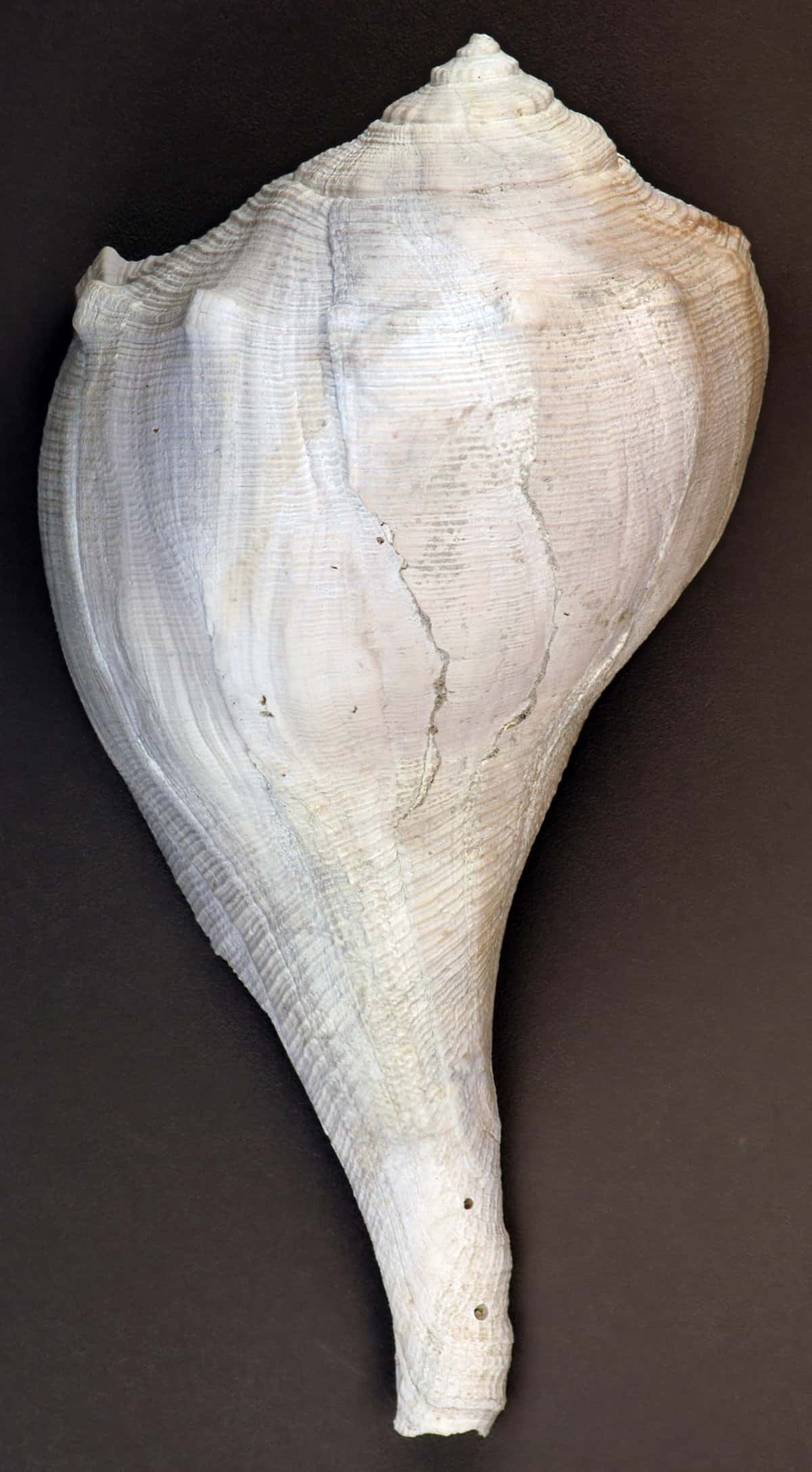
 These carnivorous sea snails are famous for their swirling tapered sea shells. They create their own homes as they grow and the larger they get the more beautiful the iconic coils become. Colors range from ivory to pale gray with the opening of the mouth of the Knobbed Whelk being a soft orange. The Knobbed Whelk has a ring of knob-like projections protruding from the widest part of the coil. The Channeled Whelk does not have these projections. Often they are often thought to be the popular conch, though the two are not to be confused. Conches live in warm water while Whelks live in cold water. Conches are herbivores and Whelks are carnivores.
Known as the bullies of the sea, whelks attack each other, as well as any other smaller animals they find. From just looking at them you wouldn’t even know they could eat other animals, but don’t be fooled. This wacky gastropod has many hidden surprises. They use chemoreceptors to locate their prey. They feed on sea worms, crustaceans, mussels, and other mollusks. Using the edge of the shell, they insert their long proboscis to eat the flesh of their prey. Gaining access to the soft tissues inside the tongue is covered in thousands of tiny denticles (tooth-like lumps).
But the thing that is most surprising about the whelks are the migration habits of these snails. Whelks are native to the North Atlantic found from Cape Cod to Florida. They alternate between deep and shallow water depending on the time of year. When the extreme weather comes, summer and winter, these snails descend to the deep waters off the coast. But when the transition weather comes, in spring and fall, they come to the intertidal mud and sand flats.
These carnivorous sea snails are famous for their swirling tapered sea shells. They create their own homes as they grow and the larger they get the more beautiful the iconic coils become. Colors range from ivory to pale gray with the opening of the mouth of the Knobbed Whelk being a soft orange. The Knobbed Whelk has a ring of knob-like projections protruding from the widest part of the coil. The Channeled Whelk does not have these projections. Often they are often thought to be the popular conch, though the two are not to be confused. Conches live in warm water while Whelks live in cold water. Conches are herbivores and Whelks are carnivores.
Known as the bullies of the sea, whelks attack each other, as well as any other smaller animals they find. From just looking at them you wouldn’t even know they could eat other animals, but don’t be fooled. This wacky gastropod has many hidden surprises. They use chemoreceptors to locate their prey. They feed on sea worms, crustaceans, mussels, and other mollusks. Using the edge of the shell, they insert their long proboscis to eat the flesh of their prey. Gaining access to the soft tissues inside the tongue is covered in thousands of tiny denticles (tooth-like lumps).
But the thing that is most surprising about the whelks are the migration habits of these snails. Whelks are native to the North Atlantic found from Cape Cod to Florida. They alternate between deep and shallow water depending on the time of year. When the extreme weather comes, summer and winter, these snails descend to the deep waters off the coast. But when the transition weather comes, in spring and fall, they come to the intertidal mud and sand flats.
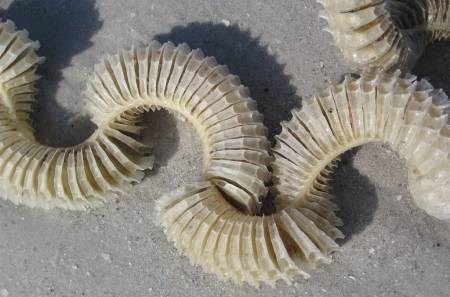 This is a string of Whelk eggs sometimes called a Mermaid's Necklace.
Whelks and humans have shared history going back millennia. Since antiquity the shells have been used for a variety of things. It was made into a rich red dye that improves its color as it ages. And the Indigenous Communities have used these shells to create wampum, the money of Indigenous Communities. The white wampum beads are made from the inner spiral of the shell.
From ancient histories to modern decoration these emblematic creatures are one of the unsung wonders of our Coastal Bays. Next time you see one out, you can share all you've learned!
This is a string of Whelk eggs sometimes called a Mermaid's Necklace.
Whelks and humans have shared history going back millennia. Since antiquity the shells have been used for a variety of things. It was made into a rich red dye that improves its color as it ages. And the Indigenous Communities have used these shells to create wampum, the money of Indigenous Communities. The white wampum beads are made from the inner spiral of the shell.
From ancient histories to modern decoration these emblematic creatures are one of the unsung wonders of our Coastal Bays. Next time you see one out, you can share all you've learned!
About the Author: Greg Atkin is the Community Engagement Specialist at the Maryland Coastal Bays Program. Their work aids the mission of the Program through the facilitation of education and interpretive programs, digital communications, diverse partnership development, and various community engagement projects.
Find out more at the Maryland Coastal Bays Program at our website: https://mdcoastalbays.org/
Get Ocean City in your inbox
Updates, events, and deals — delivered weekly. No spam, unsubscribe anytime.
From visitors
Comments
Have something to add? Drop a comment below.
Be the first to share your experience.