
Photoblogs
Creature Feature: Egrets vs. Herons
By KristinJuly 19, 20174 min read
On this page
Egrets vs. herons: what's the difference?
I'm going to let you in on a little secret: there isn't really a difference between egrets and herons. Well, there is, but it's only in appearance, not biology. An egret is really a type of heron, usually white and with fine plumes that develop during breeding season. There are three types that hang out on Delmarva, each with distinct physical features.Egrets on Delmarva
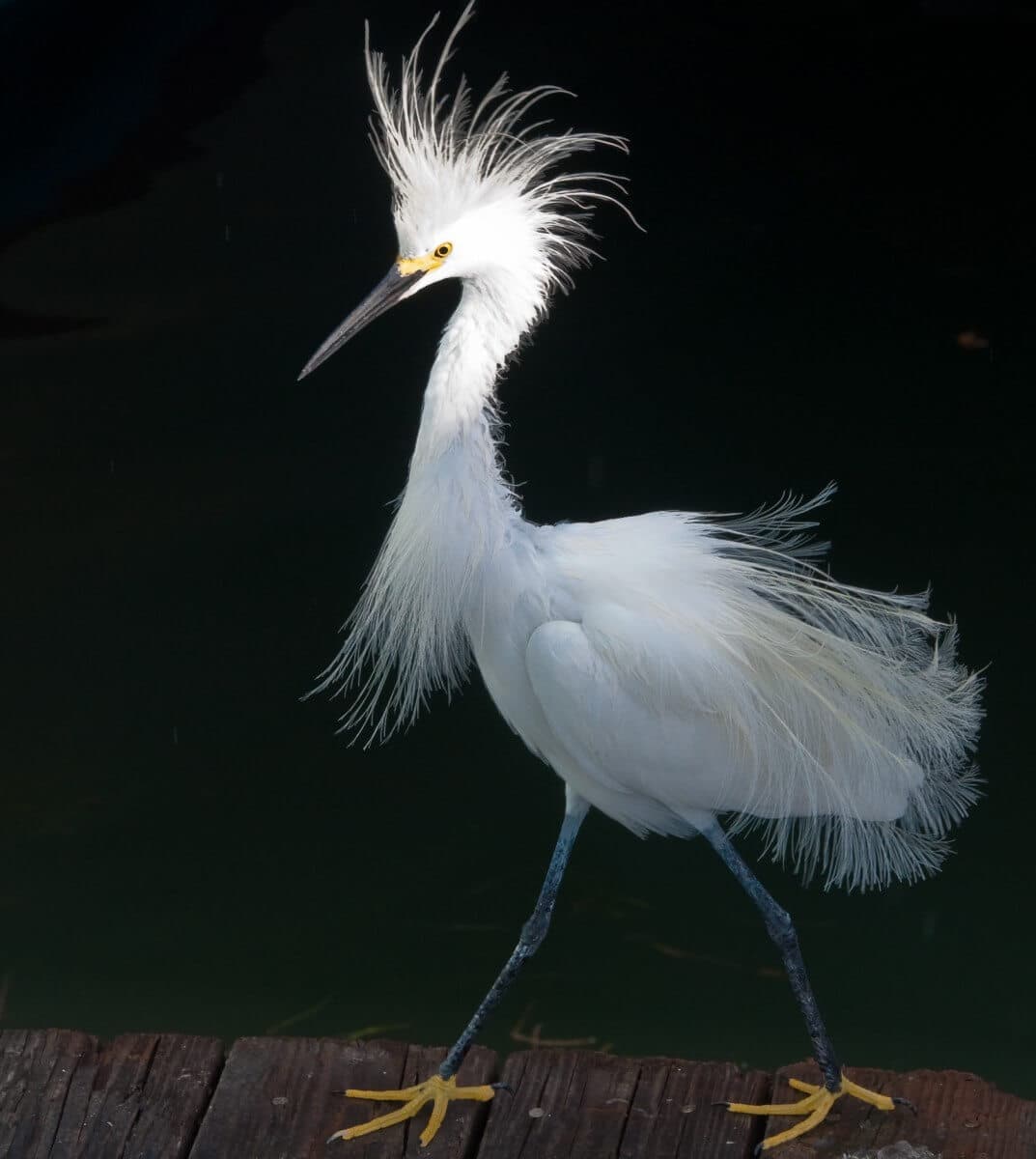
The Snowy Egret: These guys have milky white plumage the color of snow, black legs and bright yellow feet.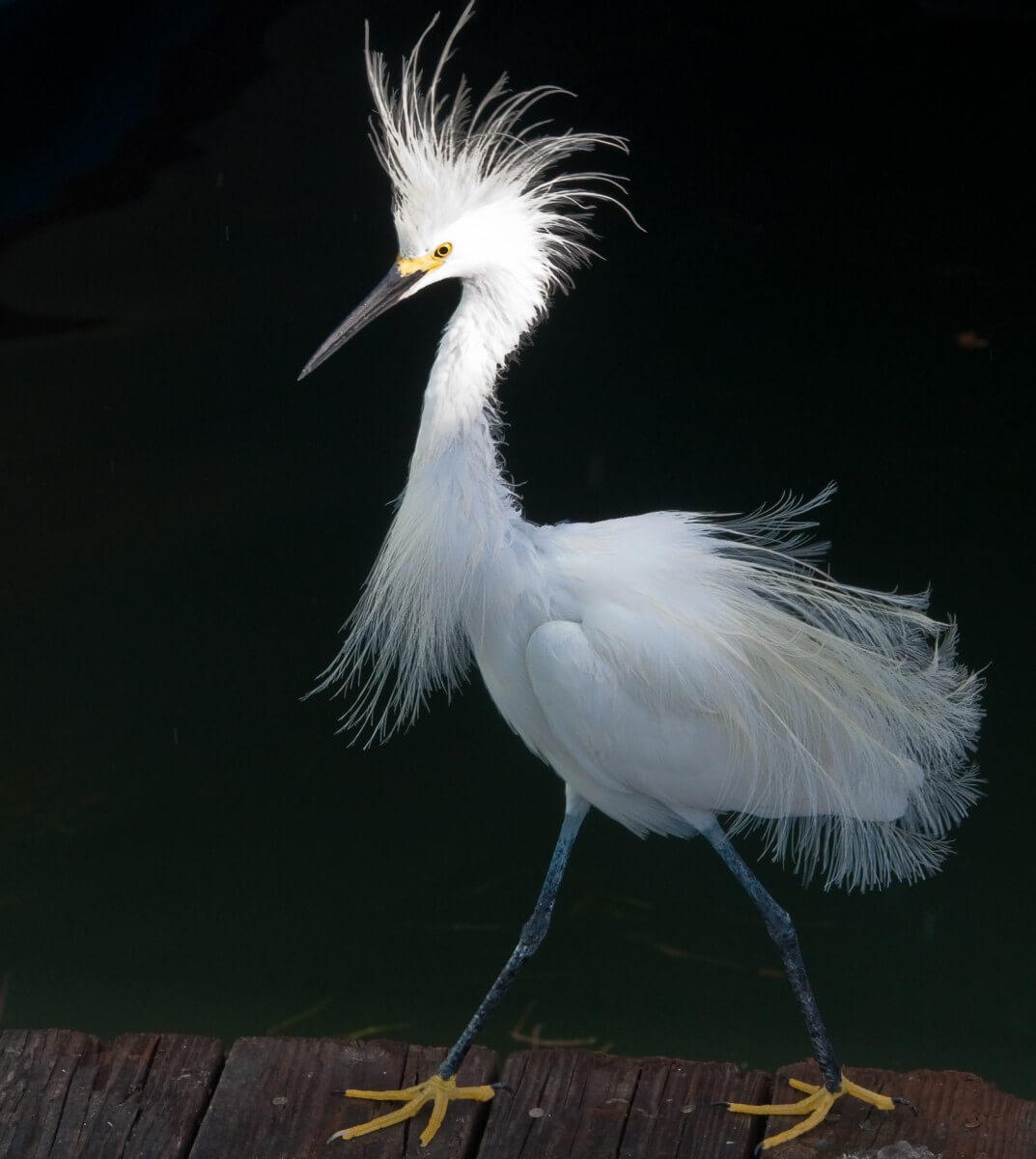 A glamorous Snowy Egret, plumes a-blazin'.
The Great Egret: Is larger than its Snowy siblings and typically has black feet rather than yellow.
A glamorous Snowy Egret, plumes a-blazin'.
The Great Egret: Is larger than its Snowy siblings and typically has black feet rather than yellow.
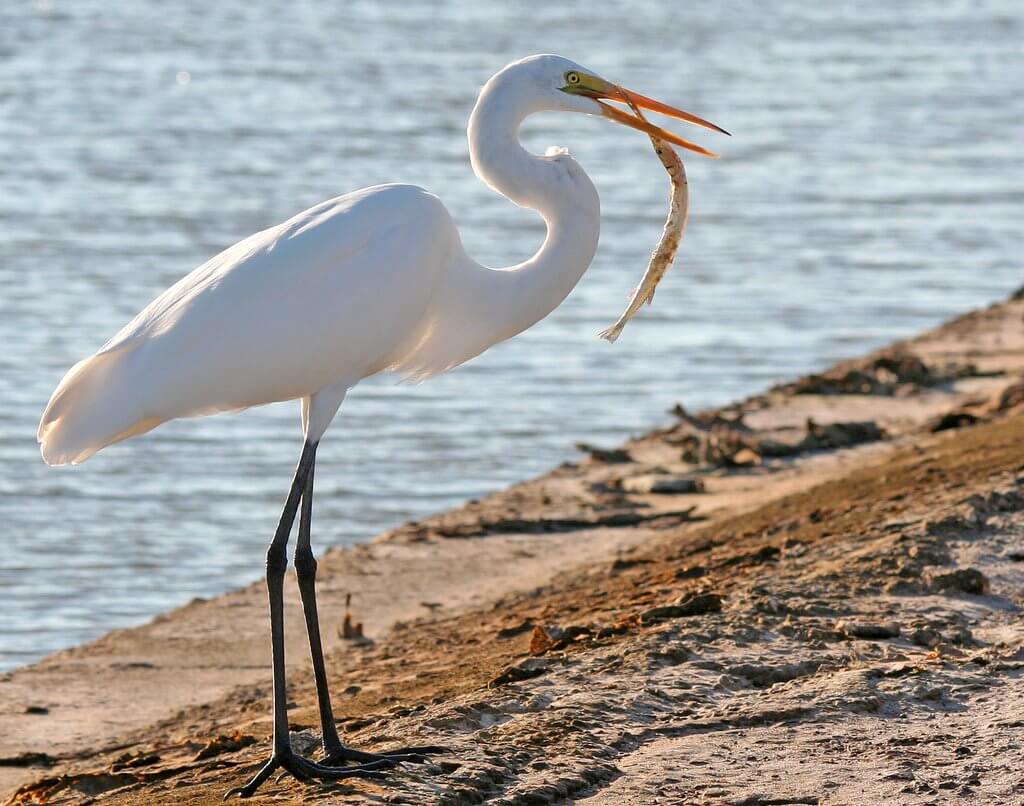 A Great Egret with the catch of the day.
The Cattle Egret: Small like the Snowy Egret, usually black-legged, but with feathers that can take on an orange-y red hue during its youth. They get their name from their tendency to follow cattle around in fields, as cattle tend to stir up the insects that Cattle Egrets eat.
A Great Egret with the catch of the day.
The Cattle Egret: Small like the Snowy Egret, usually black-legged, but with feathers that can take on an orange-y red hue during its youth. They get their name from their tendency to follow cattle around in fields, as cattle tend to stir up the insects that Cattle Egrets eat.
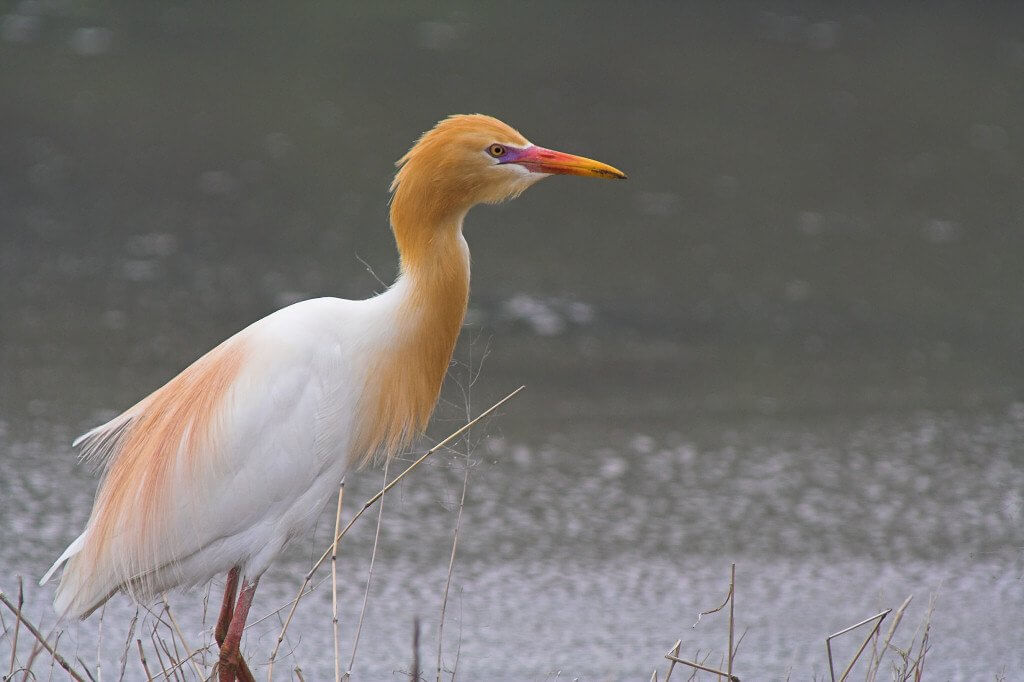 A Cattle Egret with a vibrant beak.
All three species were endangered in the 19th and 20th centuries, nearly hunted to extinction due to their beautiful plumes that were once a fashion trend. This over-hunting spawned some of the first laws to protect birds, and today the Egret is, thankfully, no longer endangered.
A Cattle Egret with a vibrant beak.
All three species were endangered in the 19th and 20th centuries, nearly hunted to extinction due to their beautiful plumes that were once a fashion trend. This over-hunting spawned some of the first laws to protect birds, and today the Egret is, thankfully, no longer endangered.
Herons on Delmarva
There are lots. Of the 64 heron species in the world, 11 of them can be found in the Delmarva region. Heron species on the peninsula include the Great Blue and Little Blue Heron, who both have distinctly blue and purple-toned feathers, the blue, purple and white Tricolored Heron, the tiny and appropriately-named Green Heron, the Black-crowned Night-Heron and the Yellow-crowned Night Heron. There are also American Bitterns and Least Bitterns which, like the egret, are another species of heron. They're short-necked and more secretive than herons and egrets, often active at night. These species are all noticeably colored, so if you see a white or mostly-white heron, it's probably an egret.How can I see one for myself?
Easily. They're everywhere, especially when you're around the Delmarva bays and marshes. Of course, as mentioned before, most of these species are quite shy and won't stick around long once they see that you're near. If there's a specific spot on the water where you've seen herons frequent, your best bet is to stake out the area and wait quietly for a bird to appear. Many photographers find that the more time they spend with a bird, the closer it will allow them to get - it just takes a lot of time and patience to build such a relationship. If you're trying to capture the majesty of the heron, use a zoom lens. And although you might be trying to build a relationship with a bird, don't feed it. Herons and egrets, like ducks and other waterfowl, aren't meant to eat bread or Cheerios, and are perfectly capable of hunting their own fish and insects.About Kristin
Kristin is a writer and photographer in Ocean City, Maryland, and is the content manager for OceanCity.com and other State Ventures, LLC sites. She loves getting reader-submitted stories and photos, so send her an email anytime. She also works part-time at the Art League of Ocean City and the Ocean City Film Festival and lives just off the peninsula with her dog and fiancé. Her photos can be found on Instagram @oc_kristin.
Get Ocean City in your inbox
Updates, events, and deals — delivered weekly. No spam, unsubscribe anytime.
From visitors
Comments
Have something to add? Drop a comment below.
Be the first to share your experience.