
Creature Features
Creepy Creatures of the Coastal Bays
By Maryland Coastal Bays ProgramOctober 13, 20213 min read
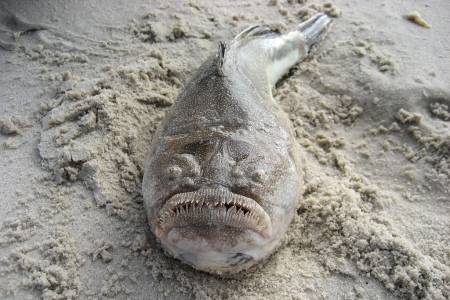 Northern Stargazer by Canvasman21
With its funky teeth, white spots, large head, and flat body, the northern stargazer (Astroscopus guttatus) is quite a strange looking creature. However, these unique features make the northern stargazer a skilled hunter. As a bottom-dwelling species, the northern stargazer feeds primarily on crustaceans, shrimp, and other benthic critters.
Northern Stargazer by Canvasman21
With its funky teeth, white spots, large head, and flat body, the northern stargazer (Astroscopus guttatus) is quite a strange looking creature. However, these unique features make the northern stargazer a skilled hunter. As a bottom-dwelling species, the northern stargazer feeds primarily on crustaceans, shrimp, and other benthic critters.
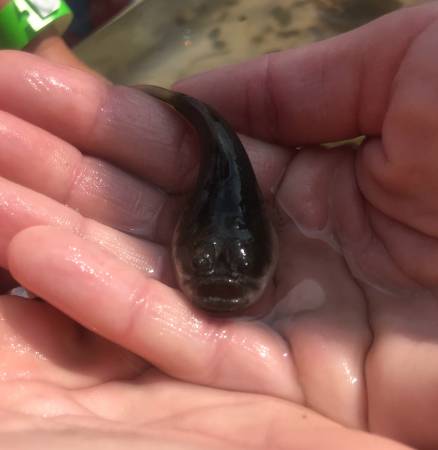 Juvenile Northern Stargazer by Liz Wist, MCBP
To feed, northern stargazers bury themselves in the sand with just their eyes and mouth sticking out, essentially camouflaging themselves from any critters swimming by. When they sense their prey approaching, stargazers produce an electric shock that stuns their target. This electric current is delivered through a special organ on the stargazers’ head, making the stargazer fall into a special category of organisms called bioelectrogenetic. Once the prey is stunned, the northern stargazer uses its large mouth to suck in the food, just like a vacuum cleaner!
Oyster Toadfish
The oyster toadfish (Opsanus tau), also referred to as the “ugly toad fish,” is quite a spooky looking critter. With fleshy flaps that line its mouth and eyes, a spiny dorsal fin, loud mating call, and powerful jaws, the oyster toadfish is definitely one of the most unique creatures in our bays.
Juvenile Northern Stargazer by Liz Wist, MCBP
To feed, northern stargazers bury themselves in the sand with just their eyes and mouth sticking out, essentially camouflaging themselves from any critters swimming by. When they sense their prey approaching, stargazers produce an electric shock that stuns their target. This electric current is delivered through a special organ on the stargazers’ head, making the stargazer fall into a special category of organisms called bioelectrogenetic. Once the prey is stunned, the northern stargazer uses its large mouth to suck in the food, just like a vacuum cleaner!
Oyster Toadfish
The oyster toadfish (Opsanus tau), also referred to as the “ugly toad fish,” is quite a spooky looking critter. With fleshy flaps that line its mouth and eyes, a spiny dorsal fin, loud mating call, and powerful jaws, the oyster toadfish is definitely one of the most unique creatures in our bays.
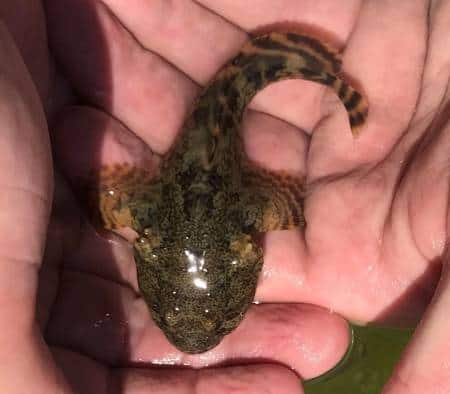 Oyster Toadfish by Liz Wist, MCBP
The oyster toadfish is scale-less, covered in a mucus-y skin that feels slimy to the touch and can sometimes even have warts! Adults have vicious snapping teeth that are powerful enough to crack through oysters and other shellfish, crustaceans, and small fish.To protect itself from predators, the oyster toadfish has a spiny dorsal fin capable of puncturing as a defense mechanism. When it comes time to mate, male oyster toadfish produce a loud foghorn-like call to attract females by quickly contracting the muscles near its swim bladder. Remarkably, the oyster toadfish is able to survive in polluted waters and is even able to withstand being completely out of the water for 24 hours!
Oyster Toadfish by Liz Wist, MCBP
The oyster toadfish is scale-less, covered in a mucus-y skin that feels slimy to the touch and can sometimes even have warts! Adults have vicious snapping teeth that are powerful enough to crack through oysters and other shellfish, crustaceans, and small fish.To protect itself from predators, the oyster toadfish has a spiny dorsal fin capable of puncturing as a defense mechanism. When it comes time to mate, male oyster toadfish produce a loud foghorn-like call to attract females by quickly contracting the muscles near its swim bladder. Remarkably, the oyster toadfish is able to survive in polluted waters and is even able to withstand being completely out of the water for 24 hours!
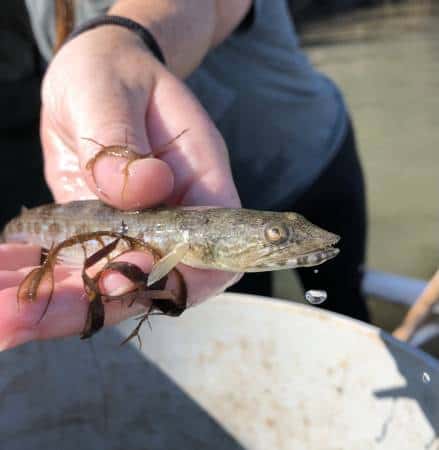 Lizardfish by Liz Wist, MCBP
Inshore Lizardfish
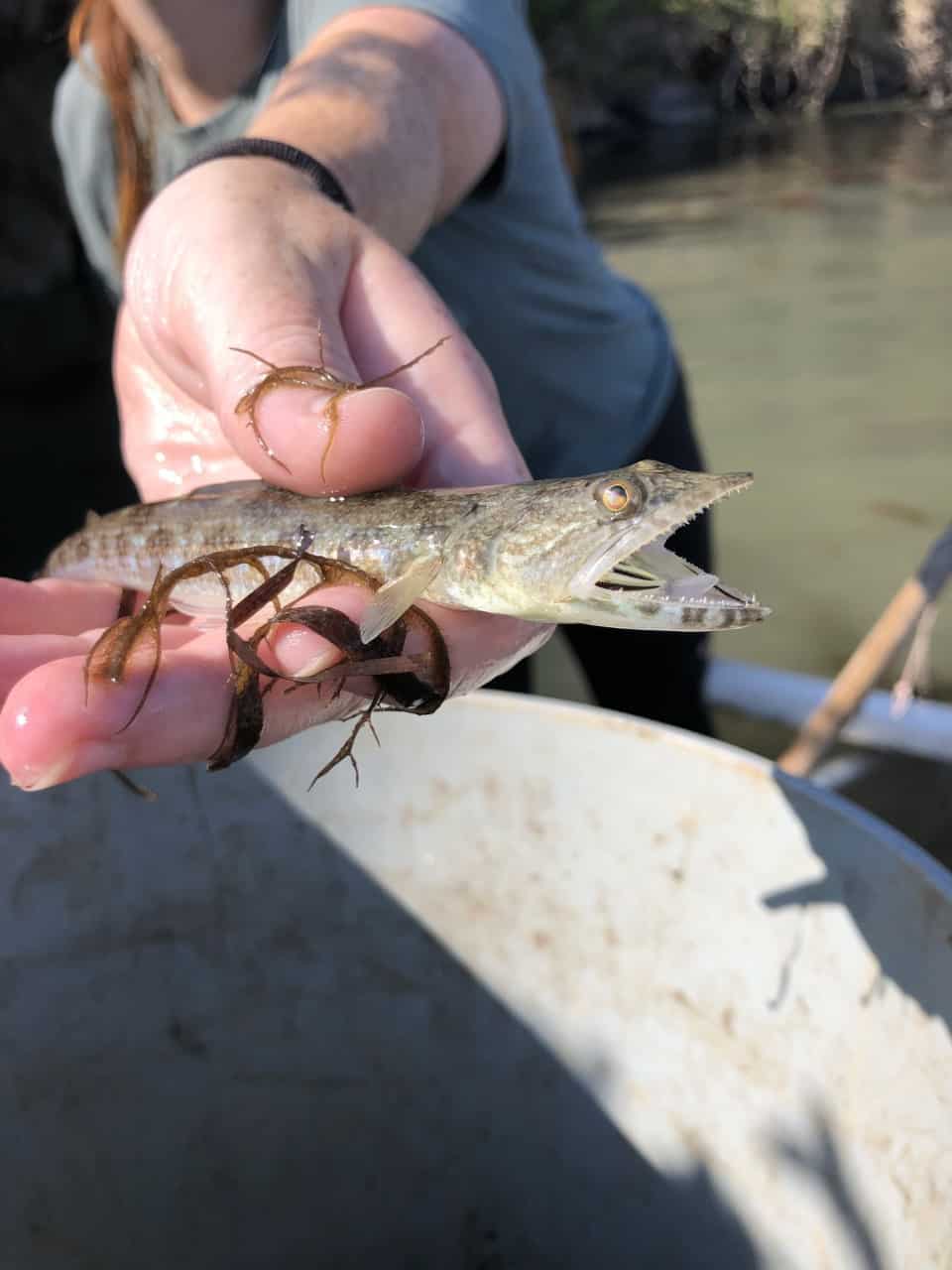
The inshore lizardfish (Synodus foetens) has truly terrifying teeth! Named for its long, slender body that mimics the physique of terrestrial lizards, the lizardfish is best known for its sharp, needle-like teeth that fill its mouth and even line its tongue. Lizardfish are skilled predators with a voracious appetite for fish and small invertebrates.
Lizardfish by Liz Wist, MCBP
Inshore Lizardfish
The inshore lizardfish (Synodus foetens) has truly terrifying teeth! Named for its long, slender body that mimics the physique of terrestrial lizards, the lizardfish is best known for its sharp, needle-like teeth that fill its mouth and even line its tongue. Lizardfish are skilled predators with a voracious appetite for fish and small invertebrates.
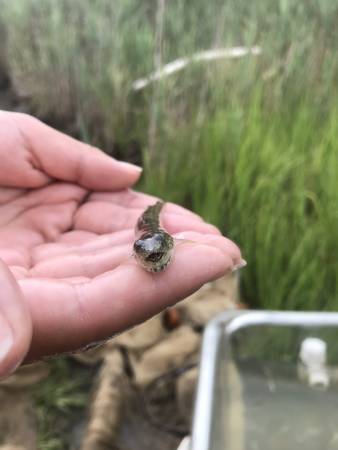 Lizardfish by Arianna Russo, MCBP
They tend to live in coastal areas with sandy bottoms where they bury themselves and wait in anticipation for their prey.Lizardfish are often described as “invisible” predators because of how quickly they can dart around and ambush their prey. The second part of their scientific name, foetens, comes from the Latin word “foetid,” meaning “smelly” or “odorous,” referring to the stinky odor emitted when they die and begin to decompose!
Lizardfish by Arianna Russo, MCBP
They tend to live in coastal areas with sandy bottoms where they bury themselves and wait in anticipation for their prey.Lizardfish are often described as “invisible” predators because of how quickly they can dart around and ambush their prey. The second part of their scientific name, foetens, comes from the Latin word “foetid,” meaning “smelly” or “odorous,” referring to the stinky odor emitted when they die and begin to decompose!
About the Author
Katie is the 2021-22 Chesapeake Conservation Corps Member at Maryland Coastal Bays Program. This year, Katie will be splitting her time between education and science, assisting with a variety of restoration and monitoring projects and educational programming at MCBP. Katie looks forward to learning more about the Bays’ creatures, MCBP’s wetland restoration projects, and water quality sampling over the course of the year while also gaining experience in environmental education and getting to spend lot of time outside!About Maryland Coastal Bays Program
All Creature Features are written by a Maryland Coastal Bays Program (MCBP) staff member. MCBP is a non-profit and National Estuary Program that exists to protect and conserve the waters and surrounding watershed of Maryland’s coastal bays to enhance their ecological values and sustainable use for both present and future generations. MCBP works with stakeholders on the local, state, and federal level to protect the five main bays within the watershed; Assawoman, Isle of Wight, Sinepuxent, Newport, and Chincoteague, through restoration, environmental education, scientific monitoring, and targeted community outreach.
Get Ocean City in your inbox
Updates, events, and deals — delivered weekly. No spam, unsubscribe anytime.
From visitors
Comments
Have something to add? Drop a comment below.
Be the first to share your experience.