Photoblogs
Local adaptive athlete sets his eyes on gold and more
By Tony RussoAugust 7, 20164 min read
On this page
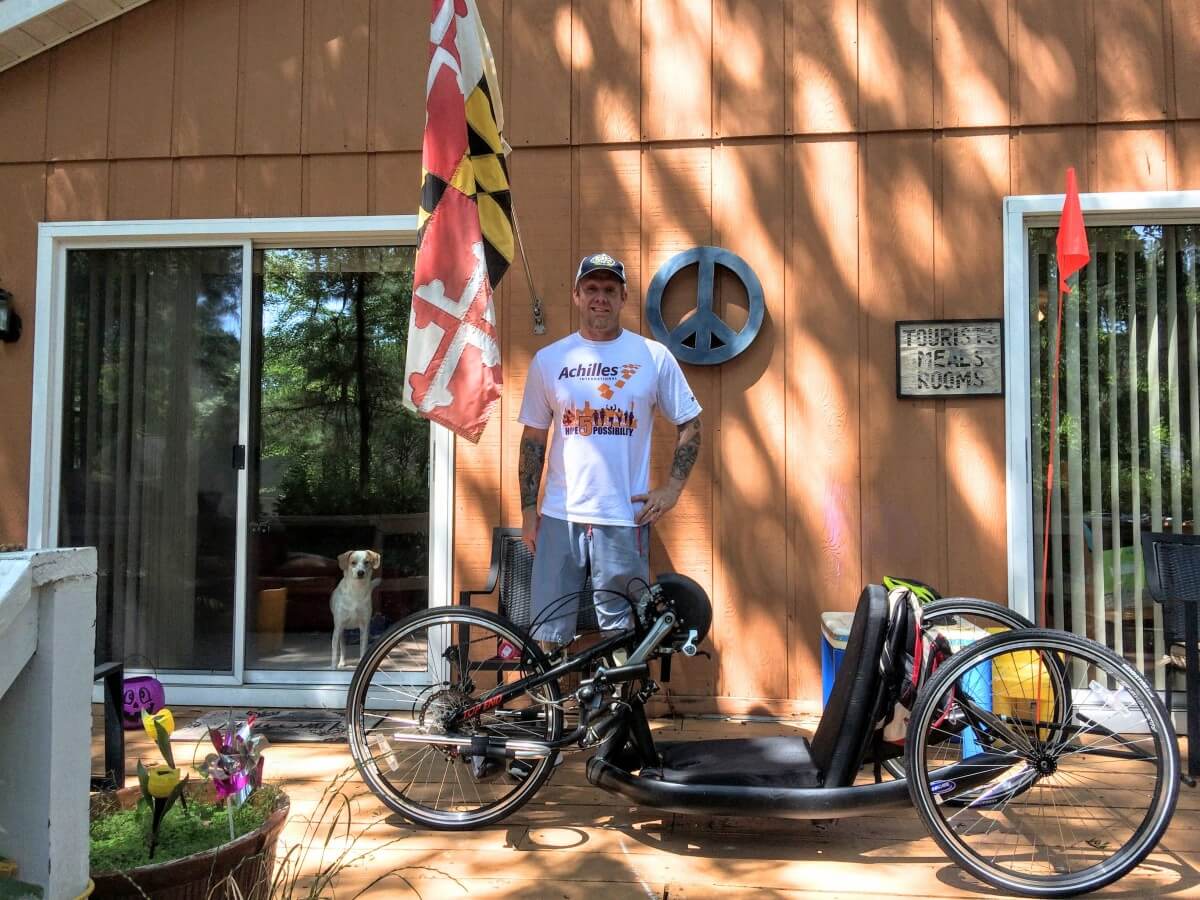
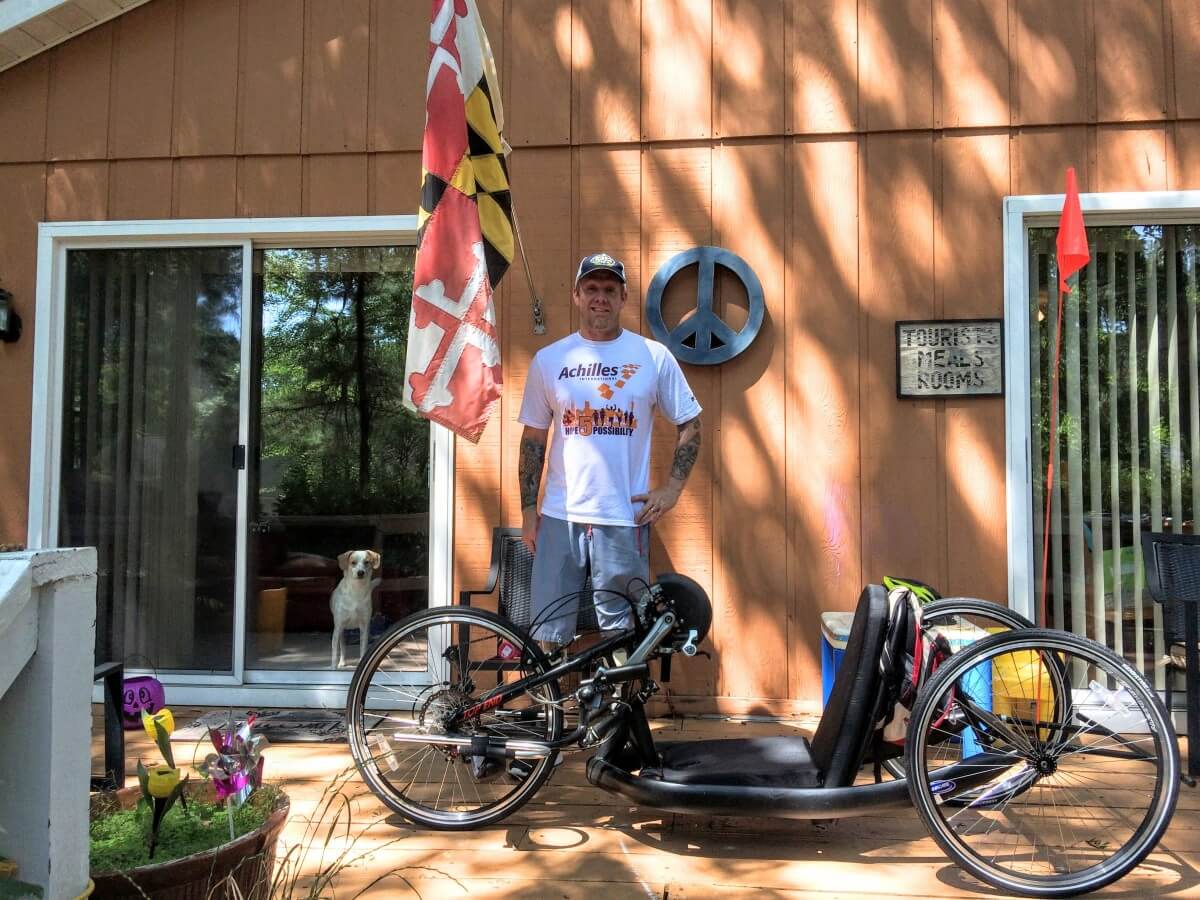 Handcyclist Jeremy Goetzinger poses with his bike in front of his Ocean Pines home as his dog Hurley looks on.
Biking for a higher reason
Biking for pleasure was fun, but eventually started to prove a little unsatisfying for Jeremy. His competitive spirit wasn't satisfied with just getting exercise, he wanted to do something more. Then he wanted to do more than that. He decided to start competing in marathons. While bicycle races tend to be exclusionary, marathons are adaptive athlete-friendly. They tend to give the handcyclists an earlier start time but hold the races concomitantly. Every major marathon, including Boston, N.Y. and Los Angeles has an official hand cycle component that is proportionally difficult to enter as the traditional race. Handcycyclists have to qualify at certain times and in smaller races before they can move up the competitive food chain. Since there was no wheelchair basketball program in Worcester County, Jeremy threw himself into handcycling nearly full time. He downloaded the training program the US Paralympic team uses and started plugging through that. He began qualifying for larger and larger races and this year announced he wanted to complete 50 marathons by the time he was 50, hoping to do five per year. He is on track to make it but he needs a little help, which is why he started two different GoFundMe initiatives, one to help support him on the road, covering travel and entrance fees and another toward the purchase of a world class bike. "There's a saying among cyclists," he said. "'Speed costs money.'" Training for and qualifying in marathons is only the first step. The second step is to earn a spot on the Team USA Paralympic squad bound for Tokyo in 2020. The elite athletes who represent the US often are partially community funded (more than 300 Paralympians have GoFundMe pages for Rio). Communities, when you think about it, sponsor athletes from the time they're in little league. As the sports require more commitment of time and resources, though, the field gets a little smaller. Step one, then, is to train at elite levels. Step two is to compete for his country. Step three? Develop a culture of adaptive sports in Worcester County that might just help the next adaptive athlete rise through the ranks.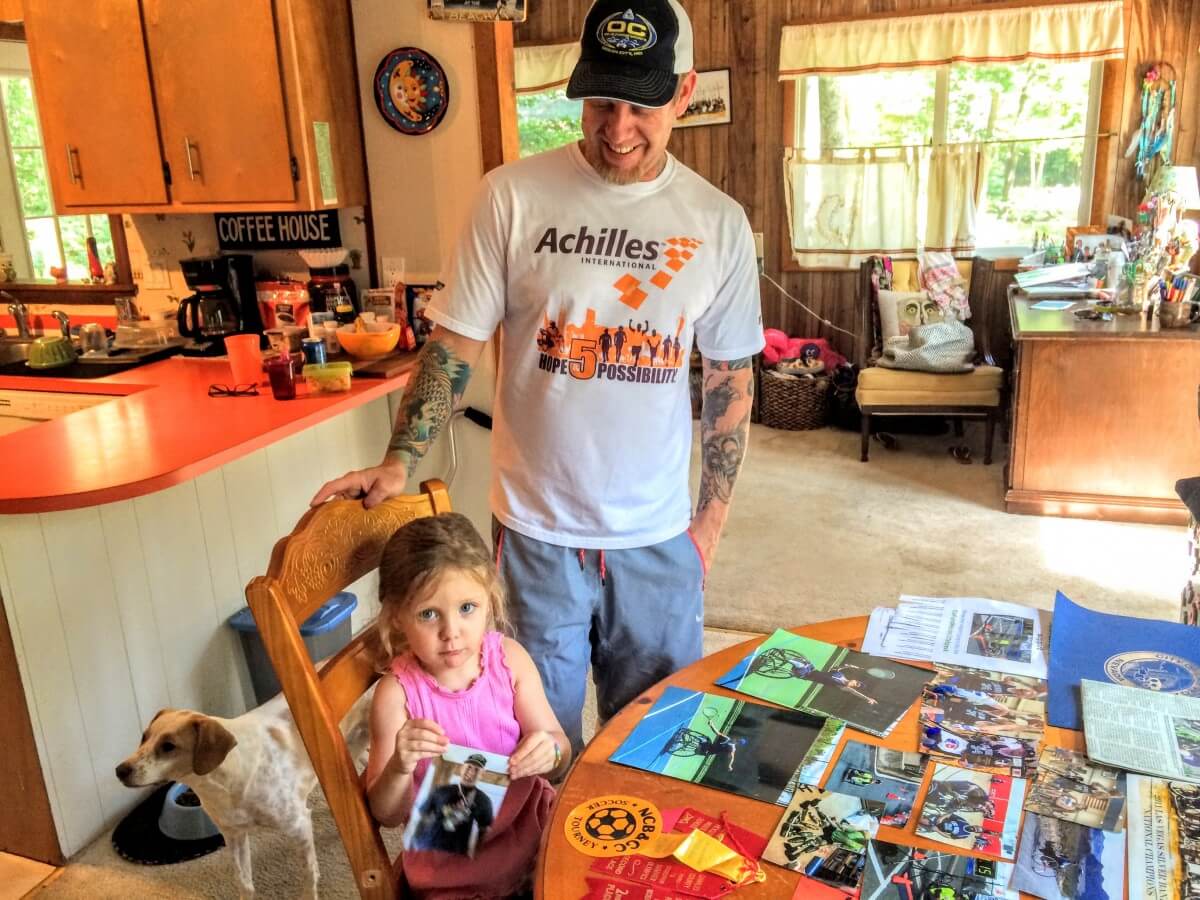 Paisley Goetzinger shows off some of the awards her dad Jeremy has won as an adaptive athlete across several competitive events.
Earning the service "Thanks"
That Jeremy didn't lose his legs in war isn't much of a sticking point for him. Competing with both service members and non-service members creates a different bond among adaptive athletes. In fact, when they heard about his fundraising attempt, many of his colleagues who did lose limbs as soldiers tease him about having gone about it in the wrong way. But in a world where there are plenty of guys who have access to some material support, cultural support is lacking. Jeremy sees it as his duty to help change that. In the coming years he and Katie, who already is a recreation department program supervisor, hope to build a community of adaptive athletes. There's no reason to not have athletic programs in the region featuring adaptive athletes, Jeremy reasons. The pair want to develop competitive programs for adaptive athletes as one prong of their mission, but also create an exercise culture among people who are disabled and maybe have given up on sports. "When you cross that finish line you forget all the things you can't do," Jeremy said. Every time he does, the thinks of another thing he can do, then it becomes something he ought to do. To help supply Jeremy with Athlete Support visit his GoFundMe here. Follow this link to help fund the gear to get him to Tokyo.About Tony Russo
Tony Russo has worked as a print and digital journalist for the better part of the 21st century, writing for and editing regional weeklies and dailies before joining the team that produces OceanCity.com and ShoreCraftBeer.com among other destination websites. In addition to having documented everything from zoning changes to art movements on the Delmarva Peninsula, Tony has written two books on beer for the History Press. Eastern Shore Beer was published in 2014 and Delaware Beer in 2016. He lives in Delmar, Md. with his wife Kelly and the only of his four daughters who hasn't moved out. Together they keep their two dogs comfortable.
Get Ocean City in your inbox
Updates, events, and deals — delivered weekly. No spam, unsubscribe anytime.
From visitors
Comments
Have something to add? Drop a comment below.
Be the first to share your experience.