
Ocean City Events
Alewife: An Oktoberfest Star
By Maryland Coastal Bays ProgramOctober 14, 20202 min read
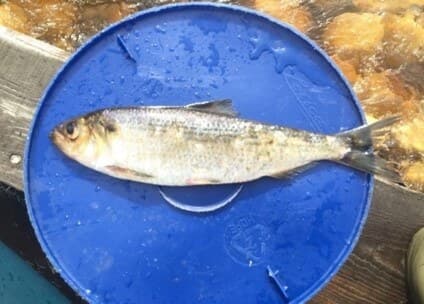
Anadromous Fish: An Interesting Brew
Anadromous is a term used to describe fish born in freshwater, who migrate soon after birth and spend most of their adult lives in saltwater, returning only to spawn in the spring and summer months. Anadromous fish belong to a classification of fish known as diadromous, this includes catadromous fish that, unlike their counterparts, mature in freshwater and spawn in saltwater.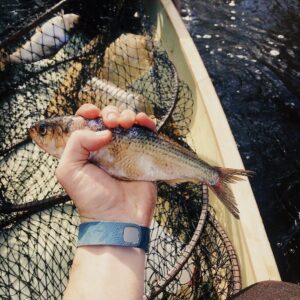 Alewife, Photo by Zachary Garmoe
There are several species of anadromous fish throughout the world, but here in the Maryland Coastal Bays we are the summer home to approximately six species of anadromous fish: White Perch, Gizzard Shad, Hickory Shad, American Shad, Blueback Herring, and of course, the infamous Alewife. After these frisky fish have completed spawning in the warm weather, they say “Auf Wiedersehen” by October, and are ready to make the trip back to their saltwater habitats where they will prepare to repeat the journey the following year.
Alewife, Photo by Zachary Garmoe
There are several species of anadromous fish throughout the world, but here in the Maryland Coastal Bays we are the summer home to approximately six species of anadromous fish: White Perch, Gizzard Shad, Hickory Shad, American Shad, Blueback Herring, and of course, the infamous Alewife. After these frisky fish have completed spawning in the warm weather, they say “Auf Wiedersehen” by October, and are ready to make the trip back to their saltwater habitats where they will prepare to repeat the journey the following year.
Raise a Stein to the Alewife
The Alewife is a member of the herring family and is closely related to the blueback herring. Alewives are slender grey green fish that often have an eye-catching silver sheen. They have a distinct black spot located just behind their eye and a noticeably forked tail. Alewives typically grow to be 10-11’’ and weigh on average half a pound, although some have been recorded to be as long as 14’’ in length and weigh over a pound! The Alewife lives a life full of adventure during its ten-year lifespan! Their bodies tell an interesting story as they produce spawning marks on their scales which shows the number of times a fish has spawned in its lifetime. When it comes to spawning, Alewives prefer to lay their eggs in slow moving waters at night, and depending on the temperature of the water, their eggs can hatch in as little as 3-6 days!Last Call
On December 26, 2011, A statewide ban on the harvest of river herring was announced as a means to help prevent extinction. Both the destruction of spawning habitat, and construction of dams have been significant contributors to the startling decline of anadromous fish. On a brighter note, there are ongoing efforts to counteract the population decline of these captivating creatures; dam removal projects in the coastal bays have proven to be successful as anadromous fish are now able to migrate upstream to spawn! Alewives may be a nomadic fish, but we’re certainly lucky to be visited by them every year. Here’s to the Alewife, a creature who is definitely worth the feature!About Maryland Coastal Bays Program
All Creature Features are written by a Maryland Coastal Bays Program (MCBP) staff member. MCBP is a non-profit and National Estuary Program that exists to protect and conserve the waters and surrounding watershed of Maryland’s coastal bays to enhance their ecological values and sustainable use for both present and future generations. MCBP works with stakeholders on the local, state, and federal level to protect the five main bays within the watershed; Assawoman, Isle of Wight, Sinepuxent, Newport, and Chincoteague, through restoration, environmental education, scientific monitoring, and targeted community outreach.
Get Ocean City in your inbox
Updates, events, and deals — delivered weekly. No spam, unsubscribe anytime.
From visitors
Comments
Have something to add? Drop a comment below.
Be the first to share your experience.